










A kitchen remodel can add as much as 80 percent of its cost back to your home’s value. This makes it one of the most rewarding home upgrades you can choose. Homeowners today look beyond style and focus on practical changes that boost daily comfort and efficiency. From layout changes to smart storage solutions, discovering how kitchen remodeling really works can help you avoid costly mistakes and create a space that matches your vision.
Table of Contents
- Kitchen Remodeling Defined And Key Concepts
- Major Types Of Kitchen Renovation Projects
- Kitchen Remodeling Process Step By Step
- Costs, Budgeting, And Value Considerations
- Common Mistakes And How To Avoid Them
Key Takeaways
| Point | Details |
|---|---|
| Comprehensive Remodeling | Kitchen remodeling involves more than aesthetics; it enhances functionality, efficiency, and home value through strategic design and renovation. |
| Budget Considerations | Kitchen renovation costs vary significantly; plan for minor, moderate, or major projects, with careful budget allocation across key elements. |
| Phased Process | The remodeling process consists of planning, material selection, and execution, emphasizing the importance of thorough research and professional guidance. |
| Avoiding Common Mistakes | Successful remodeling requires avoiding budgeting pitfalls and design errors; seek expert advice and develop detailed plans to minimize risks. |
Kitchen Remodeling Defined and Key Concepts
Kitchen remodeling is a comprehensive home improvement process that transforms your kitchen’s functionality, aesthetic appeal, and overall value. More than just updating appliances or repainting walls, it involves strategic redesign and renovation to create a space that meets your specific lifestyle needs and design preferences.
At its core, kitchen remodeling centers around optimizing workflow and efficiency.
 According to the Wikipedia kitchen work triangle concept, professional designers focus on positioning key elements like the sink, stove, and refrigerator in a triangular layout that minimizes unnecessary movement and maximizes cooking efficiency. This principle guides many modern kitchen redesigns, ensuring that the space isn’t just beautiful, but also highly practical.
A successful kitchen remodel typically involves several key components:
- Layout redesign: Reconfiguring the kitchen’s physical space
- Cabinetry updates: Replacing or refinishing existing cabinets
- Countertop selection: Choosing durable and aesthetically pleasing surface materials
- Appliance upgrades: Installing modern, energy-efficient kitchen equipment
- Lighting improvements: Enhancing both functional and decorative illumination
Ultimately, kitchen remodeling is an investment in your home’s functionality and market value. 7 Essential Kitchen Renovation Ideas for Homeowners can provide additional insights into making strategic choices that balance personal style with practical considerations.
Major Types of Kitchen Renovation Projects
Kitchen renovation projects vary significantly in scope, complexity, and investment required. According to Kitchen Saver, these projects can be broadly categorized into three distinct levels: minor, moderate, and major remodels, each offering unique opportunities for transforming your kitchen space.
Minor Kitchen Renovations typically focus on cosmetic updates and surface-level improvements. These projects are budget-friendly and can dramatically refresh your kitchen’s appearance without extensive structural changes.
Common minor renovation strategies include:
- Repainting walls and cabinets
- Updating hardware and fixtures
- Replacing countertop surfaces
- Installing new lighting fixtures
- Refinishing existing cabinetry
Moderate Kitchen Renovations represent a more comprehensive approach to kitchen transformation. These projects often involve more substantial changes, such as adding a kitchen island, replacing appliances, or reconfiguring the existing layout. What Is Home Renovation? Complete Guide for Homeowners can provide additional context for homeowners considering these more extensive updates.
Major Kitchen Renovations are the most extensive and transformative projects. These complete redesigns might involve expanding the kitchen’s physical footprint, completely replacing all cabinetry and appliances, relocating plumbing and electrical systems, and potentially creating an entirely new kitchen layout. While these projects represent the highest investment, they also offer the most dramatic improvements in functionality, aesthetic appeal, and overall home value.
Kitchen Remodeling Process Step by Step
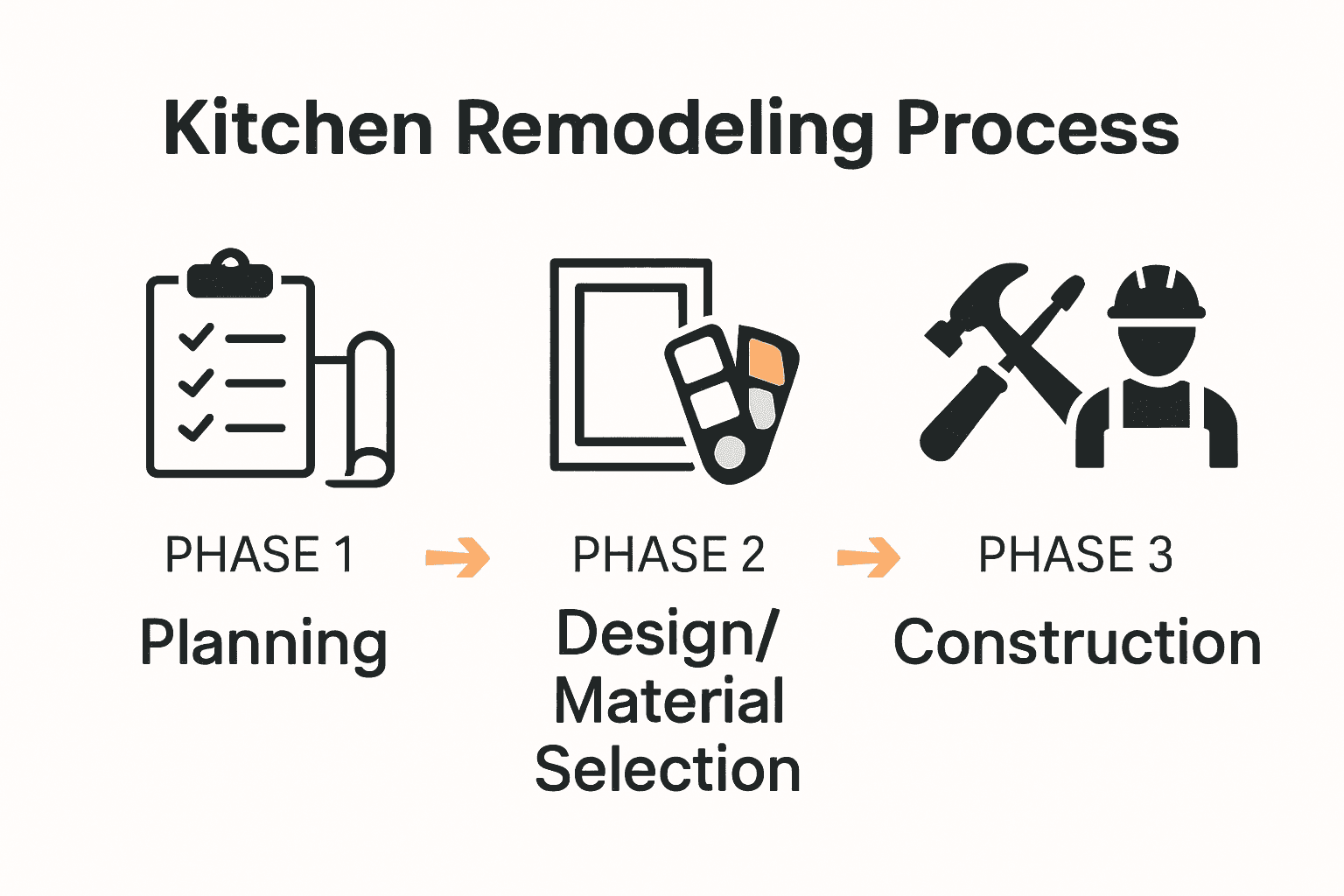
Kitchen remodeling is a complex journey that requires careful planning and execution. According to Kitchen Saver, the process typically involves three critical phases: comprehensive planning, strategic material selection, and precise execution.
Planning Phase
The initial stage of kitchen remodeling is all about thorough preparation. Homeowners should focus on:
- Assessing current kitchen functionality
- Establishing a realistic budget
- Defining specific renovation goals
- Measuring existing kitchen dimensions
- Researching design inspiration and trends
Design and Material Selection
Once the planning is complete, the next step involves selecting materials and creating a detailed design. This stage requires careful consideration of:
- Cabinetry styles and materials
- Countertop options
- Flooring choices
- Appliance specifications
- Color schemes and finishes
Execution and Construction
The final phase transforms your kitchen design into reality. Why Renovate Your Home: Complete Guide for Homeowners highlights the importance of working with professional contractors during this critical stage. The construction process typically involves:
- Demolition of existing kitchen elements
- Structural modifications if required
- Electrical and plumbing updates
- Installation of new cabinetry and countertops
- Appliance and fixture placement
- Final finishing and detailing
Successful kitchen remodeling demands patience, careful planning, and collaboration with experienced professionals who can guide you through each intricate step of the transformation.
Costs, Budgeting, and Value Considerations
Kitchen remodeling represents a significant financial investment that requires careful planning and strategic decision-making. According to Kitchen Saver, budgeting for a kitchen remodel involves carefully balancing desired upgrades with financial constraints to achieve a satisfactory outcome.
Budget Breakdown
Typical kitchen renovation costs can vary dramatically based on the project’s scope:
- Minor Remodel: $10,000 – $25,000
- Moderate Remodel: $25,000 – $50,000
- Major Renovation: $50,000 – $100,000+
Cost Allocation Strategies
Homeowners should strategically allocate their budget across key renovation elements:
- Cabinetry: 30-35% of total budget
- Appliances: 20-25%
- Installation and Labor: 15-20%
- Countertops: 10-15%
- Lighting and Electrical: 5-10%
- Unexpected Expenses: 10-15% contingency fund
Return on Investment
A well-planned kitchen remodel can significantly enhance your home’s market value. Why Renovate Your Home: Complete Guide for Homeowners suggests that kitchen renovations typically recoup 60-80% of their total cost during home resale. The key is to make strategic improvements that appeal to potential buyers while simultaneously creating a space that meets your personal needs and aesthetic preferences.
Ultimately, successful kitchen remodeling is about striking a delicate balance between financial prudence and transformative design, ensuring that every dollar spent contributes to both immediate satisfaction and long-term home value.
Common Mistakes and How to Avoid Them
Kitchen remodeling is fraught with potential pitfalls that can derail even the most well-intentioned renovation project. According to Kitchen Saver, avoiding common mistakes requires careful planning, setting a realistic budget, and considering the kitchen’s workflow to prevent dissatisfaction and unexpected costs.
Budget and Planning Mistakes
Common budgeting errors that homeowners should be aware of include:
- Underestimating total project costs
- Failing to include a contingency fund
- Choosing the lowest bid without evaluating quality
- Neglecting to get detailed written estimates
- Overlooking potential hidden expenses
Design and Functionality Pitfalls
Design mistakes can compromise both the aesthetic and practical aspects of your kitchen:
- Ignoring the kitchen’s existing workflow
- Overcrowding the space with unnecessary elements
- Sacrificing storage for purely aesthetic choices
- Mismatching appliance sizes and styles
- Inadequate lighting planning
Professional Guidance
Why Renovate Your Home: Complete Guide for Homeowners emphasizes the importance of professional guidance to navigate potential challenges. Critical steps to avoid mistakes include:
- Consulting with experienced kitchen design professionals
- Creating detailed, comprehensive project plans
- Thoroughly researching material and design options
- Getting multiple professional opinions
- Carefully reviewing and understanding contracts
Ultimately, successful kitchen remodeling requires a combination of careful planning, realistic expectations, and willingness to seek expert advice when needed. By anticipating potential challenges and approaching the project methodically, homeowners can minimize risks and create a kitchen that truly meets their needs.
Transform Your Kitchen with Expert Home Renovation Services
Facing the challenges of kitchen remodeling can feel overwhelming. From optimizing your kitchen layout using the work triangle principle to balancing budget constraints and design preferences, you want a renovation that truly enhances your daily living and adds lasting value to your home. At J. A. Kelly Contracting Services, we understand how important it is to get every detail right, whether you are planning a minor update or a major transformation.

Discover the difference of working with professionals dedicated to quality craftsmanship and customer satisfaction. Explore our Home Renovation Archives – J. A. Kelly Contracting Services to see how we bring spaces to life. Ready to take the next step? Visit our website now and request a free estimate to start building the kitchen you deserve.
Frequently Asked Questions
What is kitchen remodeling?
Kitchen remodeling is the process of transforming your kitchen’s functionality, aesthetics, and overall value. It involves strategic redesign and renovation, focusing on optimizing workflow, updating appliances, and enhancing the kitchen space according to your specific needs.
What are the major types of kitchen renovation projects?
Kitchen renovation projects can be categorized into three types: minor renovations, which focus on cosmetic updates; moderate renovations, which involve more significant changes like layout reconfiguration; and major renovations, which encompass complete redesigns that may involve structural modifications and extensive updates.
How should I budget for a kitchen remodel?
To budget for a kitchen remodel, consider the total project scope and allocate funds across key elements such as cabinetry (30-35%), appliances (20-25%), installation and labor (15-20%), and a contingency fund for unexpected expenses (10-15%).
What common mistakes should I avoid during a kitchen remodel?
Common mistakes to avoid include underestimating total project costs, neglecting to include a contingency fund, overcrowding the space with unnecessary elements, and ignoring the kitchen’s existing workflow. Consulting with experienced professionals can help mitigate these risks.
Recommended
- 7 Essential Kitchen Renovation Ideas for Homeowners – J. A. Kelly Contracting Services
- What Is Home Renovation? Complete Guide for Homeowners – J. A. Kelly Contracting Services
- What Is Bathroom Renovation? Complete Overview – J. A. Kelly Contracting Services
- Why Renovate Your Home: Complete Guide for Homeowners – J. A. Kelly Contracting Services