




Every homeowner in Moncton who dreams of a backyard upgrade quickly discovers that deck building goes beyond laying boards. The difference between a deck and other outdoor features shapes everything from City permits to property taxes, making it vital to recognize that a deck is an elevated, permanent structure attached to your home. Starting with the right knowledge and professional guidance means your new space adds genuine value, comfort, and safety, all tailored to New Brunswick’s unique climate and regulations.
Table of Contents
- Defining Deck Building For Homeowners
- Types Of Decks And Key Features
- Materials And Planning Essentials
- Moncton Deck Building Permits And Laws
- Common Risks And Cost Considerations
Key Takeaways
| Point | Details |
|---|---|
| Understanding Deck Structures | A deck is an elevated outdoor platform directly connected to your home, and awareness of its legal classification is crucial for permits and inspections. |
| Choosing the Right Deck Type | Options include attached, freestanding, and multi-level decks, each suited for specific yard layouts and intended uses. |
| Material Selection Impacts Longevity | The choice of materials, like pressure-treated wood or composite, directly affects maintenance needs and overall lifespan. |
| Permitting is Essential | Obtaining a building permit is critical to ensure compliance with safety standards and avoid complications during property sale or insurance claims. |
Defining Deck Building for Homeowners
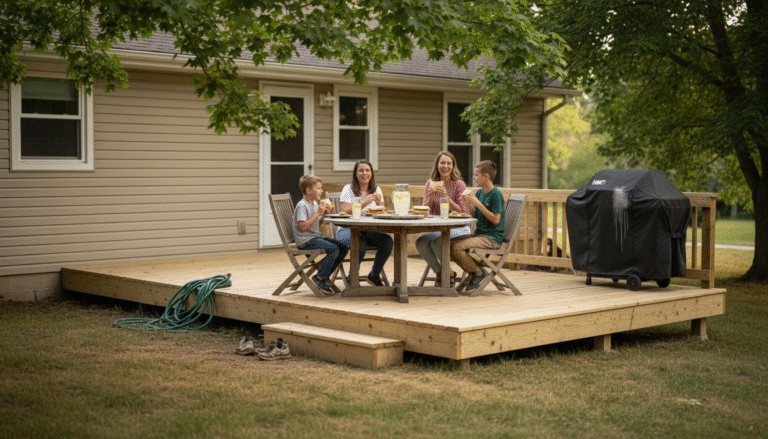
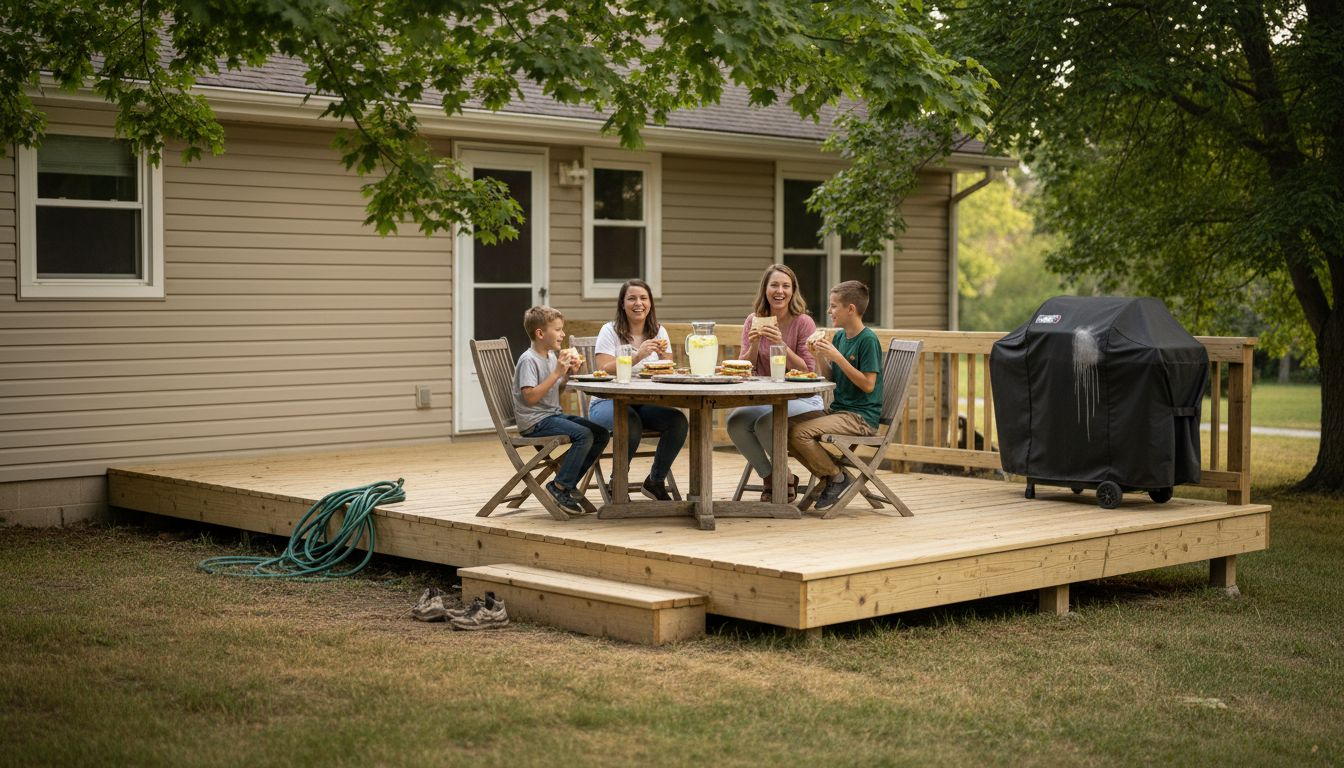
When homeowners in Moncton think about adding a deck, they’re often picturing a simple outdoor space where they can relax or entertain. But deck building is more precise than that. A deck is specifically an elevated outdoor platform that attaches directly to your home. This isn’t just architectural terminology either. Understanding what legally constitutes a deck versus other outdoor structures like patios or covered porches matters significantly for permits, inspections, and your property taxes. The distinction comes down to several factors: whether the structure connects to your house foundation, how high it sits off the ground, what kind of foundation supports it, and its overall size. When these elements combine, a structure gets classified as a permanent addition rather than a temporary improvement. That classification triggers permit requirements and building code compliance. It’s the difference between a DIY weekend project and work that requires professional oversight, inspections, and proper documentation.
At its core, deck building serves a functional purpose. Most decks exist as extensions of your living space, providing designated areas for dining, socializing, entertaining, or simply sitting outside with morning coffee. Homeowners typically construct decks from treated lumber or composite materials, both chosen for their ability to withstand Maritime weather conditions and require reasonable maintenance. The aesthetic dimension matters too. A well-designed deck can completely transform your home’s curb appeal and outdoor utility. More than just adding visual interest, a quality deck increases your property’s resale value when properly maintained and constructed to code standards. For many families in the Greater Moncton area, the deck becomes the most-used outdoor space during warm months, making it as important as an interior room would be inside the house.
What separates deck building from simply throwing lumber together is understanding the legal and structural requirements. Your deck must meet specific building codes that address everything from railing heights and stair dimensions to joist spacing and post footings. These codes exist because decks fail, people get hurt, and property damage occurs when construction cuts corners. In New Brunswick, these requirements come from the National Building Code as adopted locally. The height of your deck, whether it exceeds 24 inches off the ground, determines whether you need a building permit and inspection. A deck attached to your house foundation also requires proper flashing to prevent water damage to your home’s structure. These aren’t suggestions or optional features. They’re mandatory elements that protect both you and future buyers. Understanding these classifications before you start planning or hiring contractors prevents costly mistakes, safety issues, and problems during property sales or insurance claims.
Pro tip: Before sketching out your deck plans, contact the City of Moncton’s building department or work with a local contractor like J. A. Kelly Contracting Services to determine your specific permit requirements and building code obligations for your property.
Types of Decks and Key Features
Not all decks are created equal. Homeowners in Moncton have several distinct options when planning their outdoor space, and choosing the right type depends on your property layout, budget, and how you want to use the deck. The most common choice is an attached deck, which connects directly to your home’s foundation with a ledger board. This type makes sense when you want the deck to function as a natural extension of your house, perfect for stepping out from a sliding glass door during summer gatherings. An attached deck shares your home’s footprint and typically offers the easiest access to utilities, electricity, and plumbing if you plan future upgrades. On the other hand, a freestanding or floating deck sits independently on the ground with its own support posts and footings, requiring no connection to your house. This option works beautifully if your deck location is far from your home or if you want to avoid potential water damage to your foundation. Freestanding decks also offer more flexibility since they can be positioned anywhere on your property. Then there’s the multi-level deck, which steps up or down in sections, creating visual interest and accommodating sloped yards that are common throughout Greater Moncton. This style adds sophistication and can define different functional zones: one level for dining, another for lounging, and perhaps a third for your hot tub or fire pit.
Key structural features determine how well your deck performs against Maritime weather and regular use. Proper ledger board attachment and structural elements) keep an attached deck secure and prevent water infiltration where it connects to your house. Posts sit on concrete footings that go below the frost line, which matters significantly in New Brunswick’s freeze and thaw cycles. Inadequate footings mean your deck will shift and settle unevenly, creating dangerous gaps and wobbly railings. Joists and beams form the frame that holds the decking material, and their spacing determines how much weight the deck can support safely. Your deck must include properly sized railings if it’s more than 30 inches above ground, with balusters spaced no more than 4 inches apart so a child’s head cannot pass through. These safety features aren’t negotiable; they protect your family and guests while keeping your deck legally compliant. The decking surface itself comes in multiple materials, each with distinct advantages for Moncton’s climate.
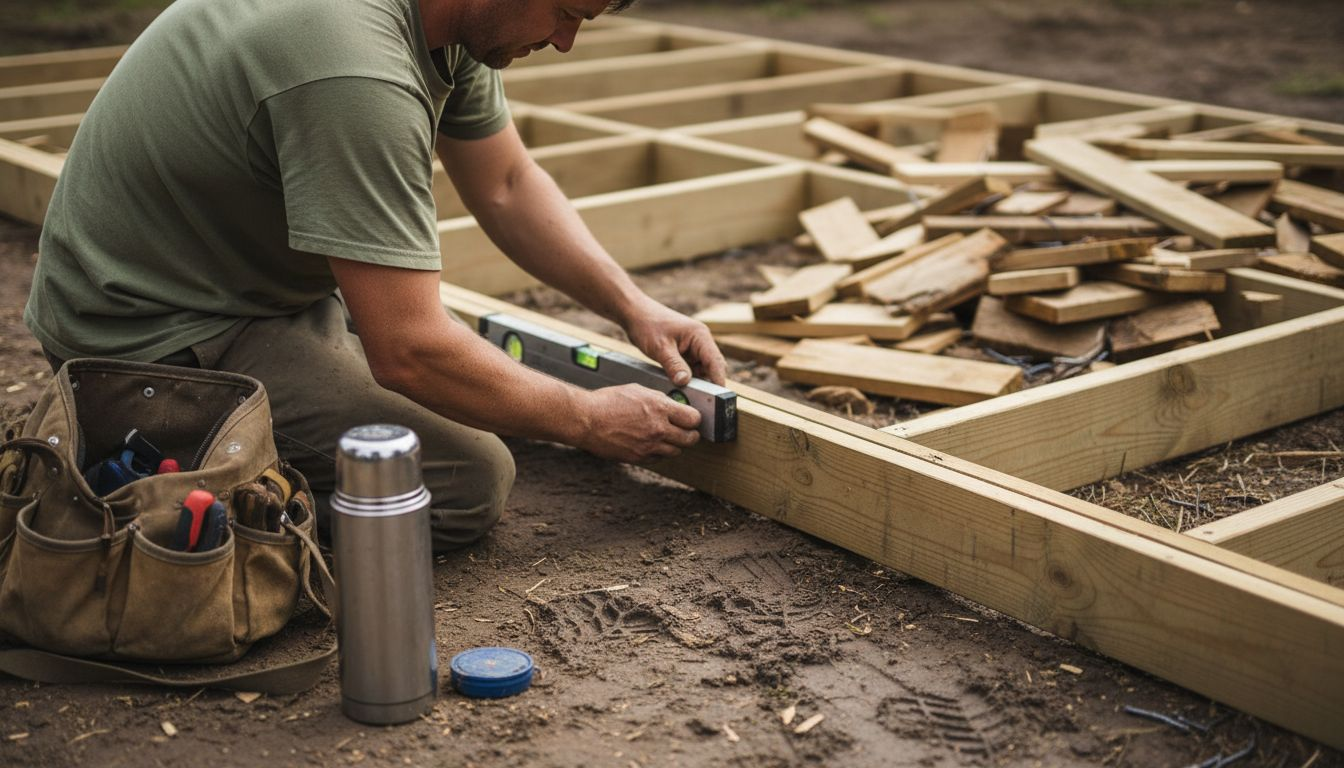
Material choices significantly impact your deck’s longevity and maintenance requirements. Pressure-treated lumber remains the most affordable option and works well if you’re comfortable with annual staining or sealing to combat rot and insects. Composite materials, made from wood fibers and plastic, offer superior durability and require minimal maintenance, though they cost more upfront. Composite doesn’t rot, splinter, or fade like wood does, making it ideal if you want a deck that looks pristine year after year without constant upkeep. Some homeowners choose aluminum or vinyl decking for commercial-grade durability, though these options suit certain design aesthetics better than others. You can also add overhead structures like pergolas, shade sails, or solid roofs to extend your deck’s usability into shoulder seasons and protect from sun or rain. Built-in benches, stairs, planters, and storage boxes transform a simple platform into a complete outdoor living room. The design possibilities range from basic weekend projects to elaborate custom spaces that become your family’s favorite gathering spot.
Choosing between these deck types requires honest assessment of your yard’s conditions, your maintenance tolerance, and your long-term vision for your outdoor space. An attached deck with composite decking suits someone who wants low maintenance and seamless indoor-outdoor flow. A freestanding structure with treated lumber appeals to budget-conscious homeowners building in a far corner of the property. Multi-level designs work best when your yard has natural slope or when you want to create distinct functional zones. The structural components remain consistent regardless of type: solid footings, properly spaced framing, safety railings, and quality decking material are non-negotiable across all deck styles.
The following table summarizes common deck types, ideal use cases, and best features for Greater Moncton properties:
| Deck Type | Ideal For | Standout Feature |
|---|---|---|
| Attached | Direct house extension, easy access | Seamless indoor-outdoor flow |
| Freestanding | Remote yard spots, flexible layout | No home foundation impact |
| Multi-level | Sloped yards, distinct zones | Visually dynamic, zoned usage |
Pro tip: Discuss your property’s unique conditions with a professional contractor before deciding on deck type; Moncton’s frost depth, yard drainage, and sun exposure all influence which deck design will perform best and provide the longest lifespan.
Materials and Planning Essentials
Choosing the right materials and planning your deck properly go hand in hand. You cannot have one without the other and expect success. The materials you select must suit Moncton’s climate while lasting through freeze cycles, salt air, and intense summer sun. Pressure-treated wood dominates the budget-friendly market and contains chemicals that resist rot and insect damage for 15 to 20 years with proper maintenance. However, pressure-treated lumber requires annual staining or sealing to maintain its appearance and protection. Composite materials blend wood fibers with recycled plastics, eliminating the need for staining while resisting fading, warping, and splintering. Composite costs significantly more upfront but saves you hundreds of dollars in maintenance over a deck’s lifetime. Hardwoods like cedar, redwood, and teak offer natural beauty and resistance to decay, though they demand regular sealing and cost considerably more than pressure-treated options. Aluminum decking provides commercial-grade durability and requires virtually no maintenance, making it ideal for homeowners who value longevity over budget. Your material choice directly impacts how much time and money you invest in upkeep, so honest assessment of your maintenance tolerance matters before you commit.
Proper planning begins with understanding structural requirements like joist spacing and footing depth, which vary based on local building codes and your deck’s intended use. New Brunswick’s frost line sits approximately 48 inches deep, meaning your concrete footings must extend below this depth to prevent frost heave that shifts and destabilizes your deck. Inadequate footings represent the single most common deck failure homeowners encounter. Your deck’s size, weight capacity, and whether it holds a hot tub or hosts large gatherings all determine the required beam and joist dimensions. A small 10-by-12-foot attached deck differs vastly from a multi-level 20-by-30-foot structure with built-in seating. The planning phase also requires honest evaluation of your yard’s drainage, shade patterns, and prevailing wind direction. A deck in a low-lying area prone to ponding water will rot faster than one on well-draining soil. Understanding sun exposure helps you decide whether to add a pergola or shade structure. Wind patterns in your location influence whether you can effectively use a deck for outdoor dining or need protective windscreens.
Safety features and finishing treatments complete the planning equation. Railings and balusters must meet specific code requirements, including height specifications and baluster spacing that prevents a four-inch sphere from passing through. Stair treads and risers require specific dimensions to prevent tripping hazards. Your deck needs adequate drainage to prevent water pooling and premature rotting of structural components. Finishing treatments protect your investment by creating a weatherproof barrier against moisture, ultraviolet rays, and temperature fluctuations. Paint, stain, sealant, or composite finishes each offer different aesthetics and protection levels. Planning ahead means selecting finishing products that complement your deck’s materials and your home’s architectural style. This is also where you consider adding amenities like built-in benches, storage boxes, planters, or shade structures that transform your deck from a simple platform into an outdoor living destination. The best time to plan these additions is before construction, not after.
Material selection and structural planning also intersect with your budget and timeline. Pressure-treated wood decks cost less but demand annual upkeep. Composite decks cost more initially but require only occasional cleaning. Your timeline matters too. A simple attached pressure-treated deck might take two to three weeks from permit to completion. A complex multi-level composite structure with custom features could take eight weeks or longer. Discussing these trade-offs with a professional contractor ensures your plan reflects your actual priorities, not fantasy expectations. A contractor can also identify site-specific challenges you might overlook, such as poor drainage patterns or utility line locations that affect your design.
Here’s a quick comparison of popular deck material options and their long-term value for Moncton homeowners:
| Material Type | Upfront Cost | Maintenance Need | Typical Lifespan |
|---|---|---|---|
| Pressure-Treated Wood | Lowest initial | Annual staining/sealing | 15-20 years with care |
| Composite | Higher up front | Occasional cleaning | 25-30 years, low fading |
| Hardwood (Cedar, etc.) | High initial | Regular sealing needed | 20-30 years, natural look |
| Aluminum | Most expensive | Minimal, easy cleanup | 30+ years, weatherproof |
Pro tip: Create a material budget that accounts for at least 15 to 20 percent contingency costs, and plan your deck during late fall or early winter when contractors have more availability and can complete work before the busy summer season.
Moncton Deck Building Permits and Laws
Skipping the permit process might seem like a way to save time and money, but it creates serious problems down the road. Moncton requires building permits for most deck projects, and understanding why matters for your property and wallet. The City of Moncton enforces these requirements to ensure decks meet safety standards, protect adjacent properties, and maintain neighborhood aesthetics. When you obtain a permit, your deck gets inspected at key stages: footing placement, frame completion, and final structural approval. These inspections catch problems before they become dangerous or expensive. An unpermitted deck becomes a major liability issue if someone gets injured. It also complicates property sales because inspectors and buyers will discover the unpermitted work during title searches or home inspections. Mortgage lenders may refuse to finance a home with unpermitted additions. Insurance companies might deny claims related to damage involving unpermitted structures. The financial consequences far outweigh the permit fee, which typically ranges from $100 to $300 depending on deck size.
Moncton’s building codes follow the National Building Code of Canada, adapted for local conditions. These codes specify exact requirements for deck construction details including footing depth and railing specifications, all designed to prevent failures that cause injuries and property damage. Decks under 30 inches tall with ground-level access might fall into a gray area regarding permits, but contacting the City of Moncton’s Building Inspections Department clarifies your specific situation. Any deck attached to your home almost certainly requires a permit because it involves connecting to your house structure. Ground-level freestanding decks sometimes avoid permit requirements, but even then, most contractors recommend getting one anyway for liability protection. The permit process includes submitting plans or sketches showing deck dimensions, materials, attachment details, and safety features. You need to specify whether the deck will support hot tubs or outdoor kitchens, as these add significant weight and require reinforced framing. The more detailed your submitted plans, the faster the permit gets approved.
Land use and zoning regulations also affect deck building in Moncton. Your deck cannot encroach on setback requirements that keep structures a minimum distance from property lines. If your lot is small or oddly shaped, these setbacks might limit your deck size significantly. Restrictive covenants on your property deed might further limit deck construction, so reviewing your deed before planning is essential. Some neighborhoods have design guidelines requiring decks to match existing architectural styles or limiting materials to specific options. Contacting the City’s Planning Department identifies these restrictions before you invest time and money in detailed designs. Understanding your role of working with a deck contractor who knows Moncton’s specific requirements streamlines the entire process. A professional contractor handles permit applications, knows exactly what inspectors require, and manages the timeline so delays don’t derail your project.
Property tax implications also matter when you build a deck. Permanently attached decks increase your home’s assessed value, which can slightly raise property taxes. This increase is usually modest, but worth understanding beforehand. Some homeowners choose freestanding decks to avoid this tax increase, though the tax savings rarely justify compromising on the deck design you actually want. Building permits create an official record that ensures your deck adds legitimate value to your home. When you sell, that documented improvement helps support your asking price. An unpermitted deck actually decreases property value because buyers see it as a liability, not an asset.
The timeline for permits typically runs two to four weeks from submission to approval, assuming no issues. Complex designs or incomplete applications extend this timeline. Starting the permit process early prevents rushed construction or missing the season when you want to use your new deck. Working with an experienced local contractor eliminates guesswork about requirements and accelerates approval. They know exactly which inspectors are particular about what details and can preempt rejections through proper documentation.
Pro tip: Contact the City of Moncton’s Building Inspections Department before hiring a contractor or buying materials; confirm permit requirements for your specific property to avoid expensive surprises or rework once construction begins.
Common Risks and Cost Considerations
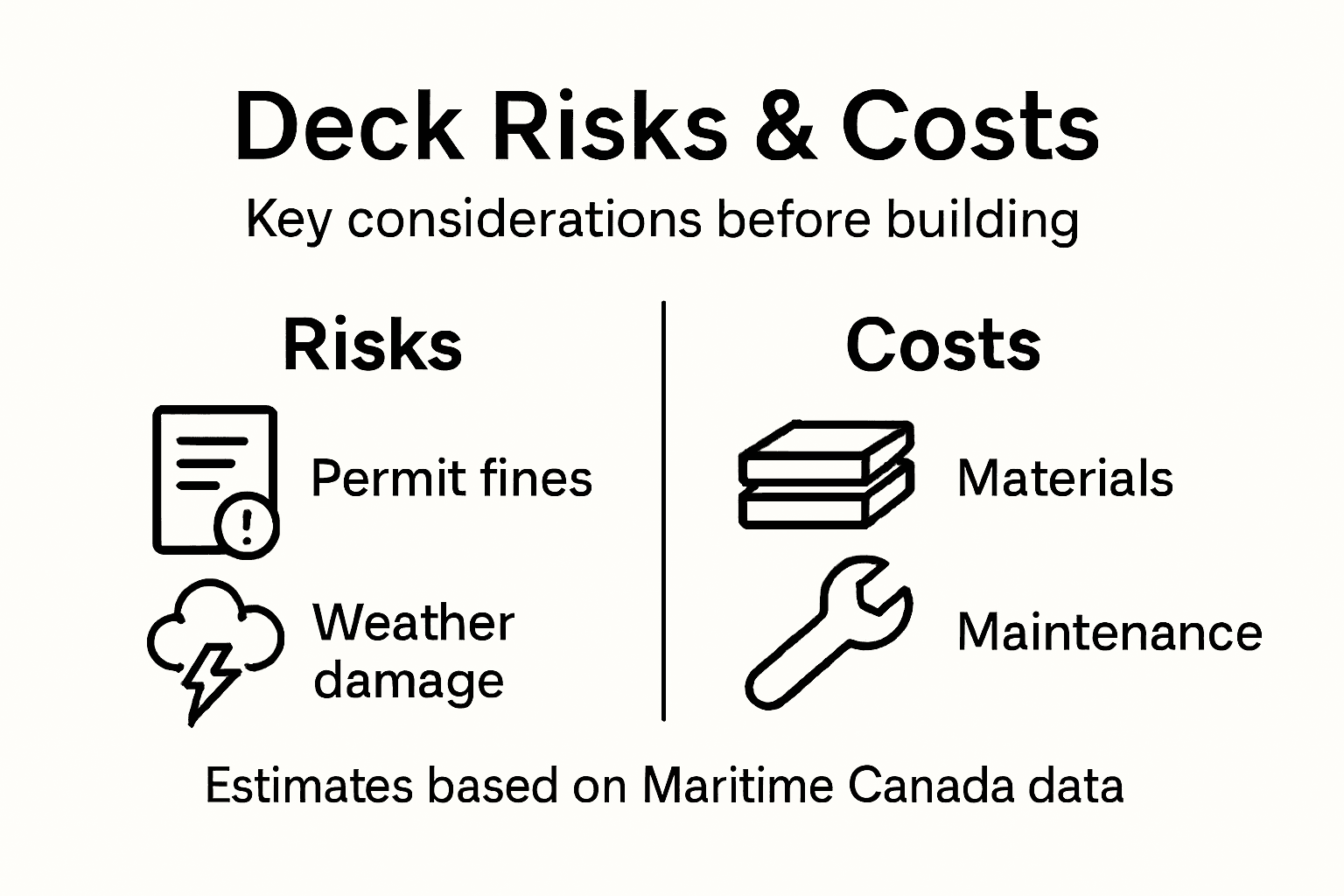
Deck building involves real financial and safety risks that deserve careful attention before you swing a hammer or hire contractors. The most serious risk stems from structural failures caused by improper foundations, inadequate attachment to your house, or non-compliance with building codes. A deck with footings that don’t reach below the frost line will shift and heave during Moncton’s freeze-thaw cycles, creating dangerous gaps and unstable railings. A ledger board installed without proper flashing allows water to seep behind it, rotting your home’s rim joist and causing foundation damage that costs thousands to repair. Inadequate beam sizing or joist spacing might support normal use initially, but collapse under concentrated loads like snow accumulation or a crowded gathering. These failures don’t just damage property; they injure people. A collapsing deck creates liability exposure that extends beyond your homeowner’s insurance if the failure resulted from negligence or code violations. This is why hiring qualified contractors and obtaining proper permits matters so much. Professional installation protects you legally and physically.
Financial risks extend beyond construction itself. Building permit fines for unpermitted work range from $500 to $2,000 depending on violation severity and City of Moncton enforcement. Property tax increases follow permanently attached decks because they add assessed value to your home. A 16-by-20-foot composite deck might increase your property tax by $200 to $400 annually, adding up significantly over decades. Homeowner’s insurance companies might deny claims related to unpermitted structures, leaving you fully responsible for damage from storms, fires, or accidents. Mortgage lenders can require removal of unpermitted additions before refinancing or selling your home. These cumulative financial consequences often exceed the cost of doing things correctly from the start. Understanding structural risks from improper foundation and inadequate attachment helps you recognize why the permit and inspection process exists.
Cost considerations require realistic budgeting across multiple categories. Materials dominate the expense for most homeowners. A simple 12-by-16-foot pressure-treated deck runs $3,000 to $5,000 in materials. The same size in composite material costs $6,000 to $9,000. Labor typically adds 50 to 100 percent to material costs, depending on complexity and local wage rates. A two-person crew in Moncton charges $50 to $75 per hour, meaning a 20-hour project adds $1,000 to $1,500 in labor. Permits cost $100 to $300. Professional inspections add another $150 to $300. Removing old decking or addressing site preparation increases costs further. Many homeowners underestimate the total, then cut corners on safety features or materials to stay under budget. This false economy creates the exact risks you wanted to avoid. Building compliance with updated building codes ensures your investment lasts decades rather than becoming a safety liability.
Maintenance costs deserve attention too. Pressure-treated wood requires annual staining or sealing at $300 to $500 per year. Over a deck’s 20-year life, that amounts to $6,000 to $10,000 in maintenance costs beyond the initial construction. Composite materials reduce this to occasional cleaning and minor repairs, saving thousands over time. Hot tubs, outdoor kitchens, or pergolas add $2,000 to $10,000 or more depending on complexity. If you plan these features, include them during initial construction rather than adding them later, which costs significantly more and requires new permits.
Weather damage represents an ongoing risk in Maritime climates. Heavy snow loads, ice accumulation, salt spray, and high winds all degrade decks faster than inland locations. Choosing rot-resistant materials and proper finishes protects your investment. Inadequate drainage leads to standing water and premature wood failure. Proper roof pitch and slope on your deck surface prevents pooling.
Pro tip: Get written cost estimates from at least two licensed contractors that itemize materials, labor, permits, and inspections separately; compare not just total price but what each contractor includes and excludes from their quote.
Enhance Your Home with Expert Deck Building Services
Understanding the vital role that proper deck construction plays in your home’s safety, value, and enjoyment is the first step toward making your outdoor vision a reality. If you want a durable, code-compliant deck designed to withstand Moncton’s unique weather and frost challenges, choosing professional guidance matters. From navigating building permits to selecting materials that match your maintenance preferences, this process can feel overwhelming. Key concerns like footings below the frost line, safe railing installation, and long-term upkeep are critical to avoid costly repairs or risks to your family.
Discover how partnering with experienced contractors transforms your deck from a simple platform into a beautiful outdoor living space. At J. A. Kelly Contracting Services, we specialize in custom decks tailored to your property conditions and lifestyle. Explore our proven expertise through our Home Renovation Archives – J. A. Kelly Contracting Services and learn why reliable craftsmanship is the foundation of lasting satisfaction. Don’t risk permit issues or building code violations. Act now to secure your free consultation and start planning a deck that truly enhances your Moncton home’s value and safety. Visit us at https://jakellycontractingservices.ca to take the first step toward your new outdoor getaway.
Frequently Asked Questions
What is the definition of deck building?
Deck building refers to the construction of an elevated outdoor platform that is attached directly to a home, providing an extension of living space for various outdoor activities.
What are the common types of decks homeowners can choose from?
Common types of decks include attached decks, which are connected to the house; freestanding or floating decks, which are independent structures; and multi-level decks, which are designed to create distinct functional zones or accommodate sloped yards.
Why is proper planning essential before starting a deck project?
Proper planning is essential as it involves understanding structural requirements, site conditions, and the specific needs for materials and safety features, which help prevent costly mistakes, safety issues, and future legal complications related to building codes and permits.
What are the possible risks of building a deck without a permit?
Building a deck without a permit can lead to significant risks, including safety hazards, financial liabilities from injuries, complications during property sales, and potential fines. Unpermitted structures may also complicate insurance claims related to damages or accidents.
Recommended
- What Is Deck Construction and Why It Matters – J. A. Kelly Contracting Services
- Role of a Deck Contractor: Everything You Need to Know – J. A. Kelly Contracting Services
- What Is Deck Resurfacing and Why It Matters – J. A. Kelly Contracting Services
- Complete Guide to Roof Decking for Homeowners – J. A. Kelly Contracting Services
- Cedar Roof Conversion Vancouver | Paragon Roofing BC