

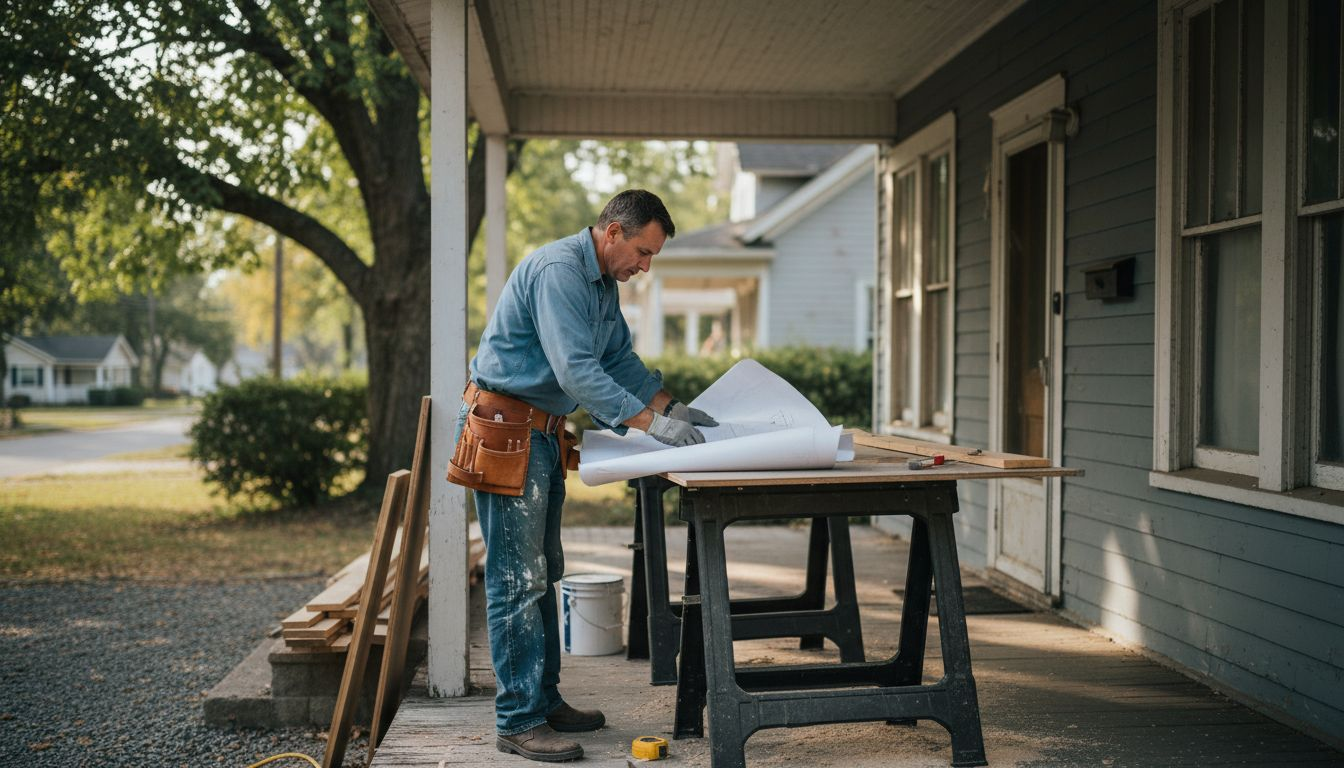
Over 40 percent of serious construction injuries in North America are linked to improper roofing safety measures, a figure that highlights how crucial these standards are for every American homeowner and contractor. Neglecting even basic protocols can put lives and investments at risk. By understanding the essentials of roofing safety, you gain powerful insight into protecting your household, your crew, and the success of every roofing project from unnecessary danger.
Table of Contents
- Understanding Roofing Safety Standards Basics
- Key Types of Roofing Safety Equipment
- Legal Safety Requirements For Roofing In Canada
- Risks Of Ignoring Roofing Safety Protocols
- Best Practices For Homeowners And Contractors
Key Takeaways
| Point | Details |
|---|---|
| Fall Protection is Critical | Falls are the leading cause of serious injuries in roofing, making fall protection measures essential for worker safety. |
| Importance of Compliance | Adhering to legal safety requirements is vital to avoid severe penalties and protect worker lives. |
| Collaborative Safety Practices | Successful roofing projects rely on communication and safety engagement between homeowners and contractors. |
| Invest in Training and Equipment | Continuous education and high-quality safety equipment are necessary to maintain a secure working environment for roofing professionals. |
Understanding Roofing Safety Standards Basics
Roofing safety standards represent a critical framework designed to protect workers and homeowners from potentially dangerous construction scenarios. Occupational safety guidelines mandate comprehensive protocols that address multiple risk factors inherent in roofing projects, ensuring systematic approaches to workplace protection.
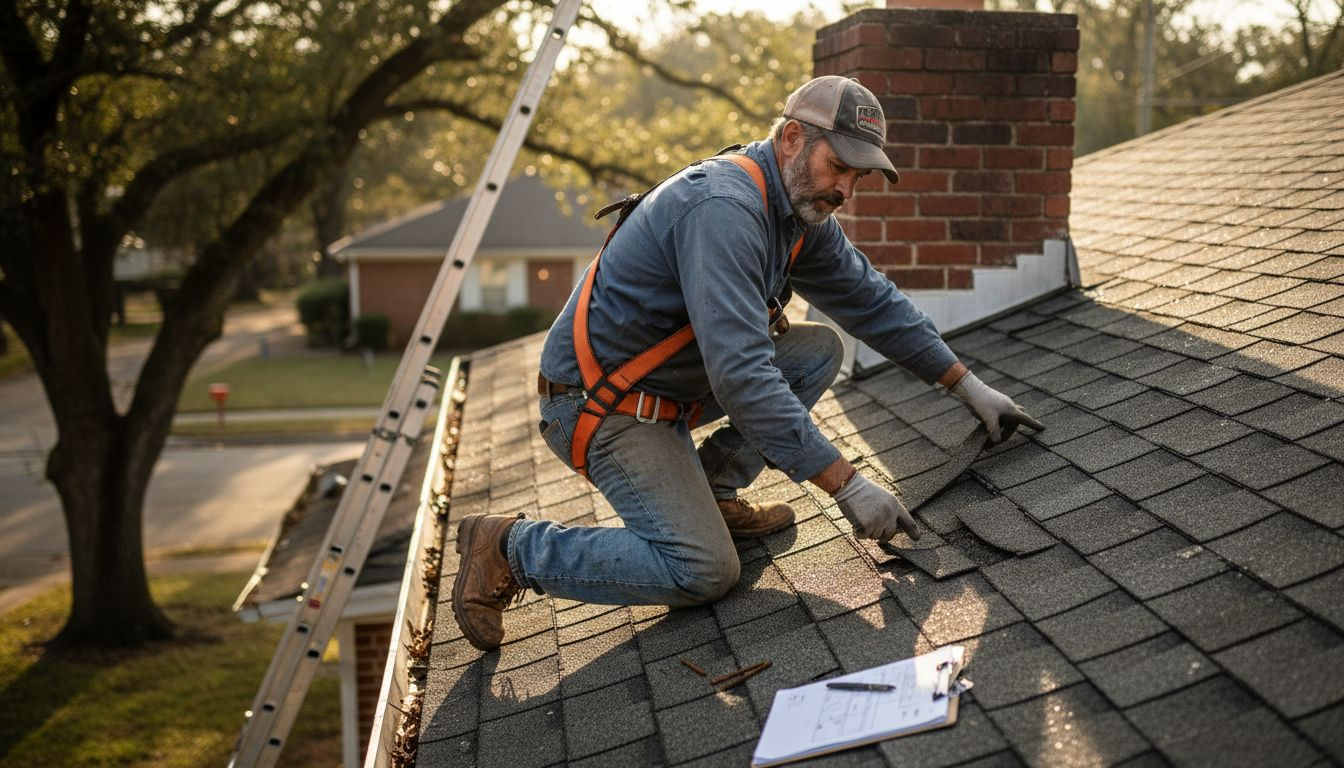
Workers face numerous hazards during roofing installations and repairs, including fall risks, electrical dangers, and equipment-related accidents. Fall protection emerges as the most significant concern, with statistics revealing that falls account for a substantial percentage of serious injuries in construction environments. The Occupational Safety and Health Administration (OSHA) recommends specific preventative measures:
- Mandatory use of personal fall arrest systems
- Installation of guardrail systems
- Strategic placement of safety nets
- Comprehensive worker training programs
Effective roofing safety standards also encompass broader considerations beyond physical protection. Professionals must navigate complex regulatory requirements, maintain proper equipment maintenance, and implement rigorous risk assessment protocols. Understanding these standards isn’t just about compliance – it’s about creating a culture of safety that protects both workers and property owners from potential catastrophic incidents. By prioritizing comprehensive safety practices, roofing professionals can significantly reduce workplace accidents and ensure successful project completion.
Key Types of Roofing Safety Equipment
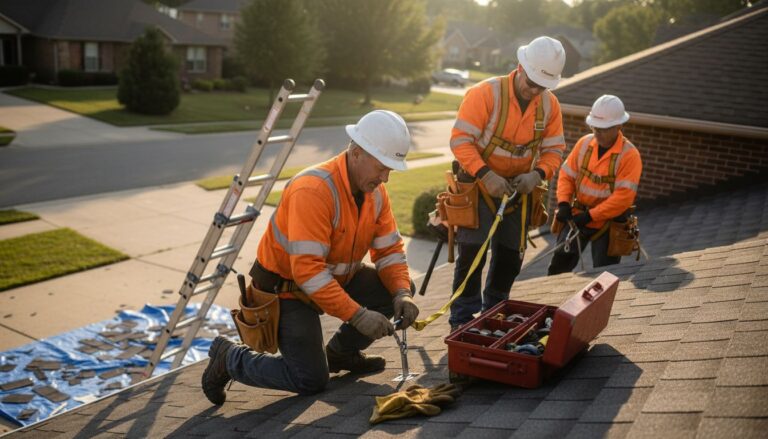
Roofing professionals rely on specialized safety equipment to mitigate potential workplace hazards and ensure worker protection. Comprehensive fall protection systems represent the cornerstone of effective roofing safety, with multiple layers of protective gear designed to prevent accidents and minimize injury risks.
Personal protective equipment plays a critical role in worker safety. According to Canadian safety standards, essential protective gear includes:
- Hard hats to prevent head injuries
- Safety footwear with slip-resistant soles
- Protective eyewear
- High-visibility clothing
- Specialized work gloves
- Knee pads for extended roof work
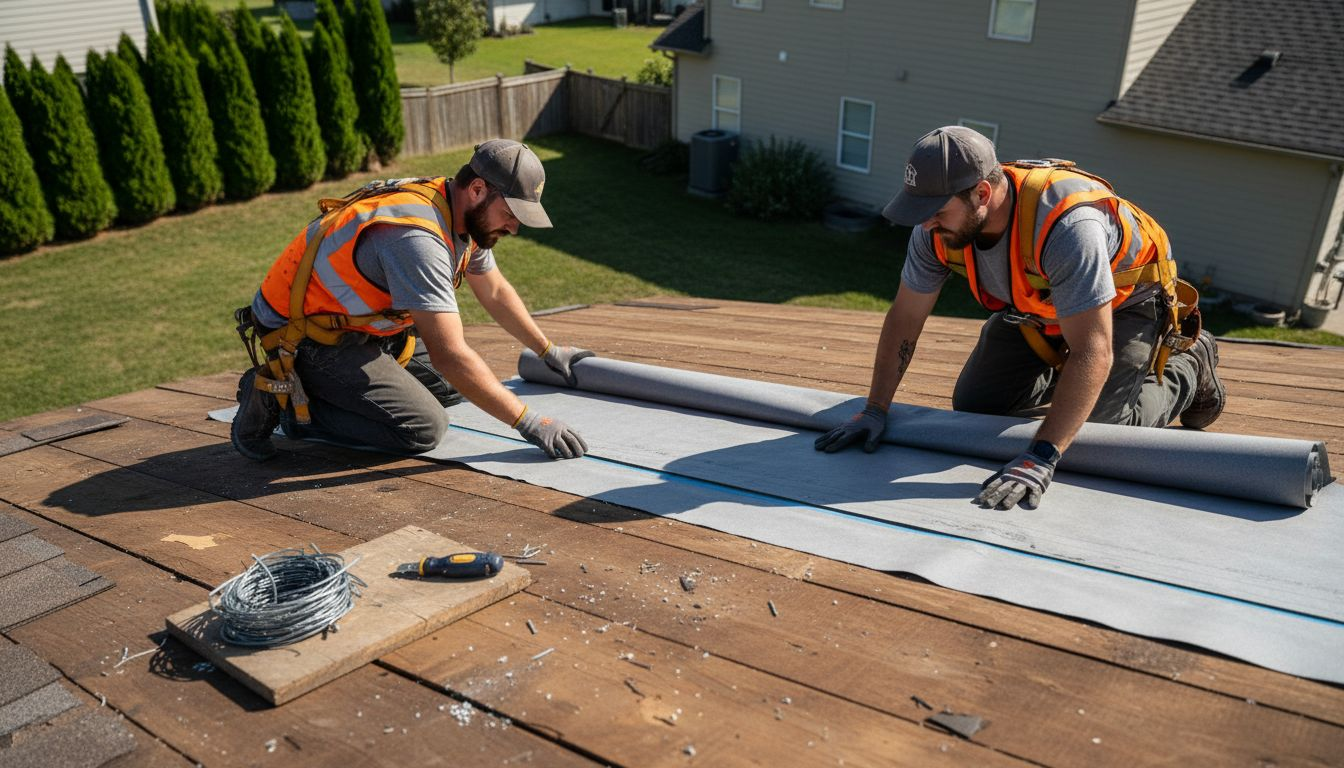
Beyond personal protection, advanced safety systems incorporate multiple technological solutions. Roof safety equipment includes sophisticated fall arrest systems such as anchored harnesses, guardrails, safety nets, and strategically positioned roof walkways. These systems work collectively to create multiple layers of protection, ensuring workers can navigate potentially dangerous roofing environments with significantly reduced risk of serious injury.
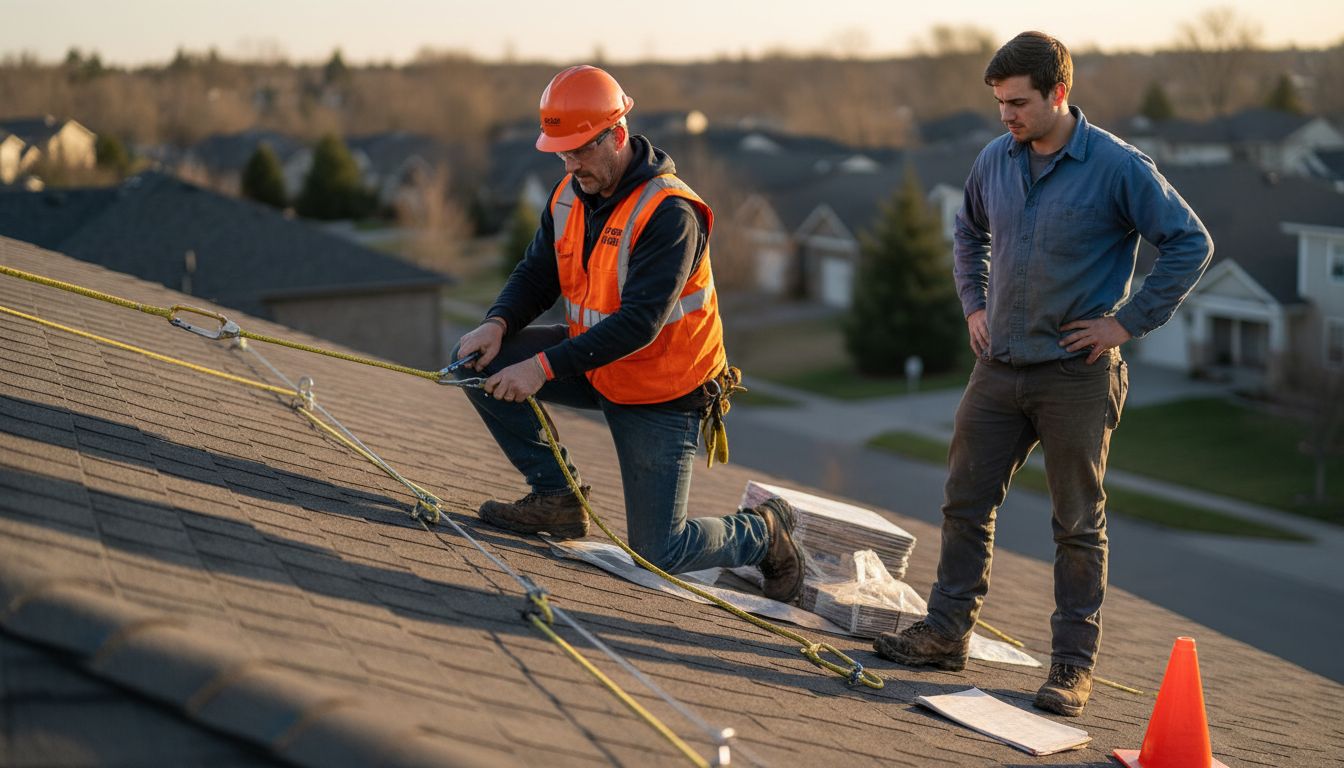
Ultimately, selecting and implementing the right safety equipment requires comprehensive understanding of specific job site conditions, worker training, and ongoing maintenance of protective gear. Professional roofing teams must continuously evaluate their safety protocols, invest in high-quality equipment, and prioritize worker education to create the most secure possible working environment.
Legal Safety Requirements for Roofing in Canada
Canadian roofing safety regulations represent a comprehensive framework designed to protect workers from potentially life-threatening workplace hazards. Legal safety standards for roofing professionals mandate strict compliance with provincial and national occupational safety guidelines, ensuring robust protection mechanisms are consistently implemented across construction environments.
The legal requirements for roofing safety in Canada encompass multiple critical components:
- Mandatory use of Canadian Standards Association (CSA) approved protective equipment
- Comprehensive worker training programs
- Detailed documentation of safety protocols
- Regular workplace risk assessments
- Specific fall protection system requirements
- Employer accountability for worker safety
Fall protection systems represent a cornerstone of these legal requirements. National fall protection regulations specify precise technical standards for equipment design, installation, and maintenance, with each province maintaining additional specific guidelines. These regulations require employers to implement multilayered safety approaches, including personal protective equipment, collective protection systems, and comprehensive worker education programs.
Ultimately, legal safety requirements are not merely bureaucratic checkboxes but critical lifesaving protocols. Roofing professionals must navigate a complex landscape of regulatory compliance, understanding that each safety measure represents a fundamental commitment to protecting human life. Continuous education, rigorous equipment maintenance, and proactive risk management remain essential in maintaining the highest standards of workplace safety in the Canadian roofing industry.
Risks of Ignoring Roofing Safety Protocols
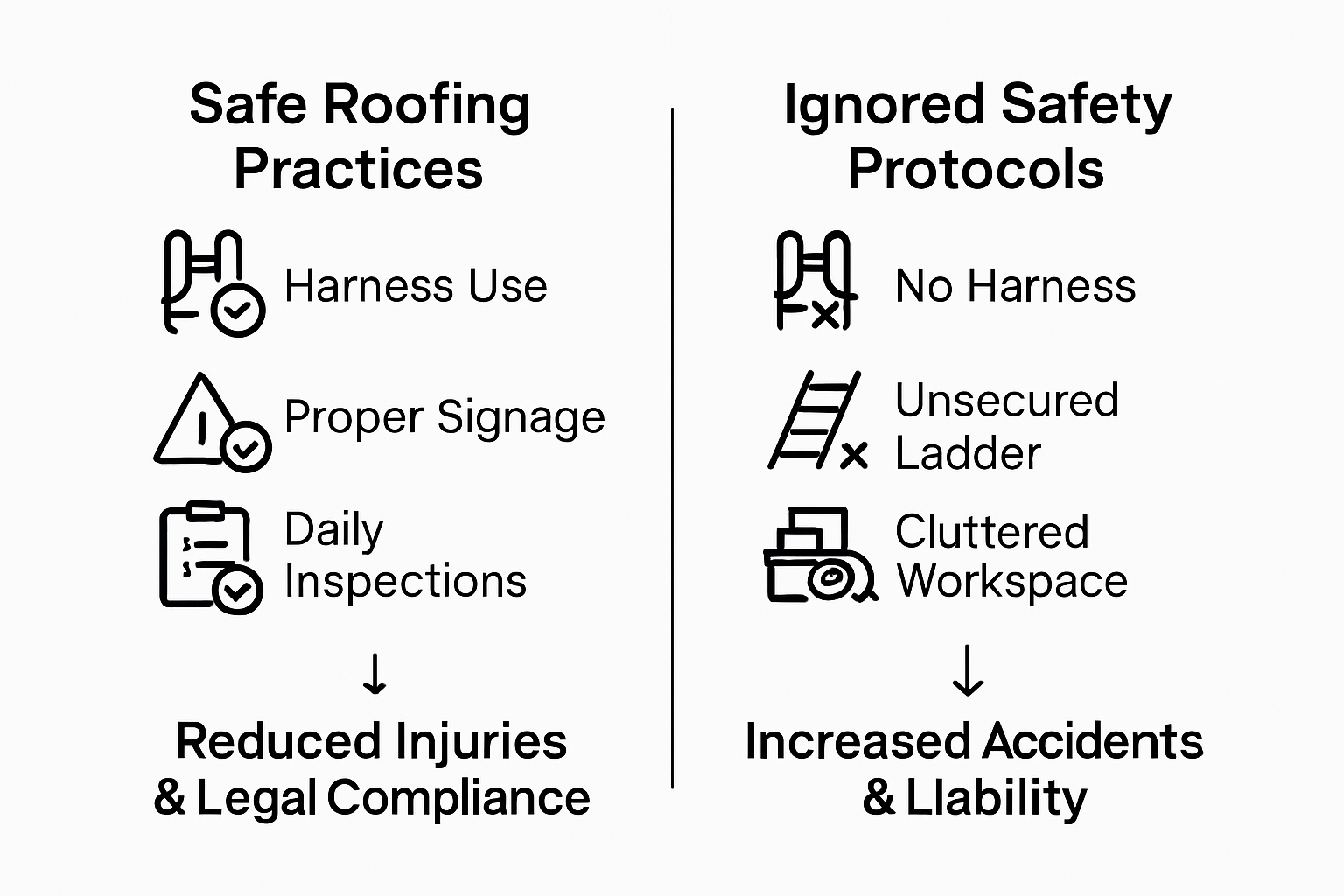
Ignoring safety protocols in roofing can lead to catastrophic consequences for workers and businesses alike. Construction industry fall statistics reveal that falls represent the most significant workplace hazard, accounting for a substantial percentage of serious injuries and fatalities in roofing environments.
Workplace safety risks associated with neglecting proper protocols include:
- Increased likelihood of fatal workplace accidents
- Significant financial penalties for non-compliance
- Potential legal liability for employers
- Permanent disability for workers
- Substantial workers compensation claims
- Loss of professional licensing and certifications
- Damage to company reputation and future business opportunities
The human cost of safety protocol negligence extends far beyond immediate physical injuries. Workers exposed to unsafe conditions face long-term health consequences, including chronic pain, reduced mobility, and psychological trauma. Employers who fail to implement comprehensive safety measures not only risk worker lives but also expose themselves to substantial financial and legal repercussions. Professional roofing teams must recognize that safety protocols are not optional suggestions but critical lifesaving mechanisms designed to protect both human capital and business sustainability.
Beyond the immediate physical dangers, ignoring safety protocols can trigger a cascading series of professional and financial consequences. Insurance premiums skyrocket, legal challenges become inevitable, and the reputational damage can permanently undermine a company’s ability to secure future contracts. Responsible roofing professionals understand that investing in robust safety systems is not an expense, but a fundamental commitment to worker protection and professional excellence.
Best Practices for Homeowners and Contractors
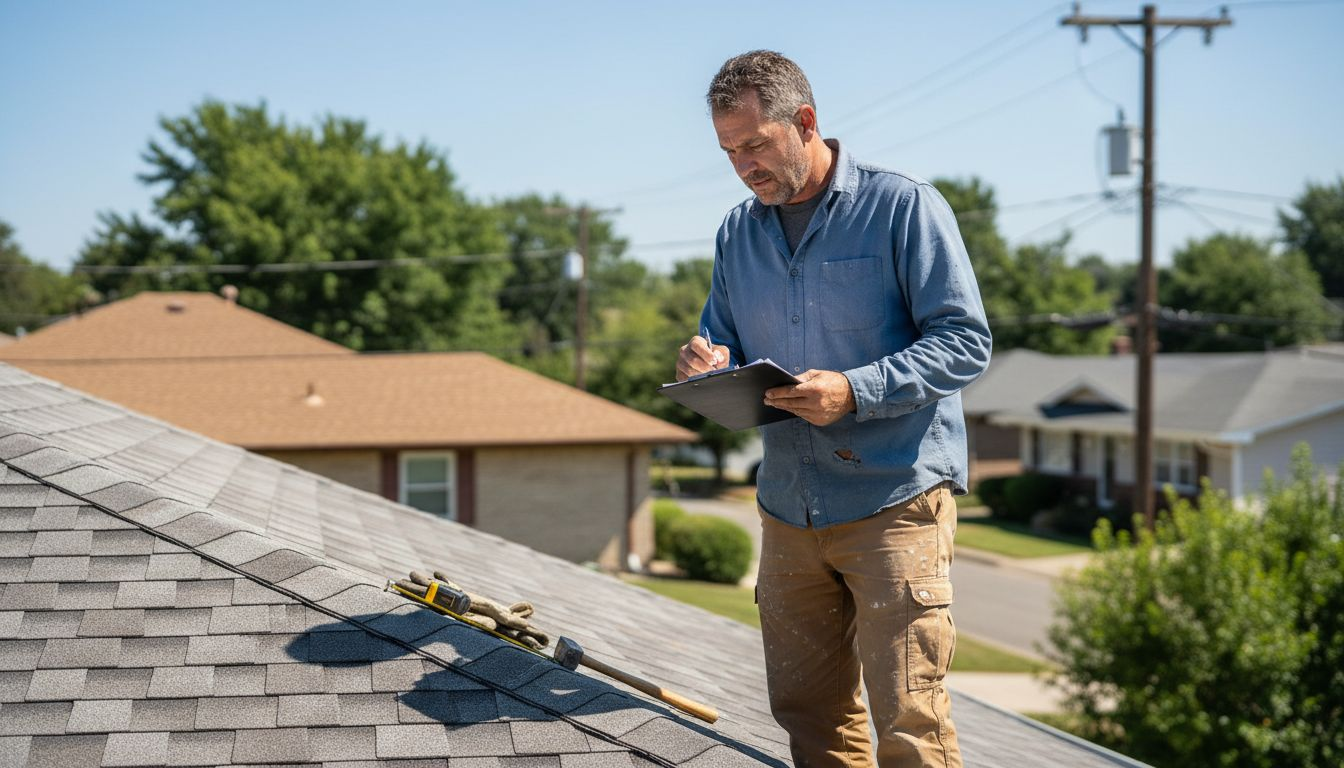
Successful roofing projects demand collaborative efforts between homeowners and contractors, with safety serving as the fundamental cornerstone of every interaction. Professional roof inspection protocols emphasize the critical importance of systematic hazard assessments and controlled access strategies that protect both workers and property owners.
Safety collaboration requires specific practices from both parties:
For Homeowners:
- Verify contractor licensing and insurance credentials
- Request detailed safety documentation
- Understand basic roofing safety requirements
- Maintain clear communication about project risks
- Ensure unobstructed workspace around the property
For Contractors:
- Implement comprehensive safety training programs
- Use appropriate personal protective equipment
- Conduct thorough site risk assessments
- Maintain updated safety documentation
- Communicate potential hazards transparently
- Establish clear emergency response protocols
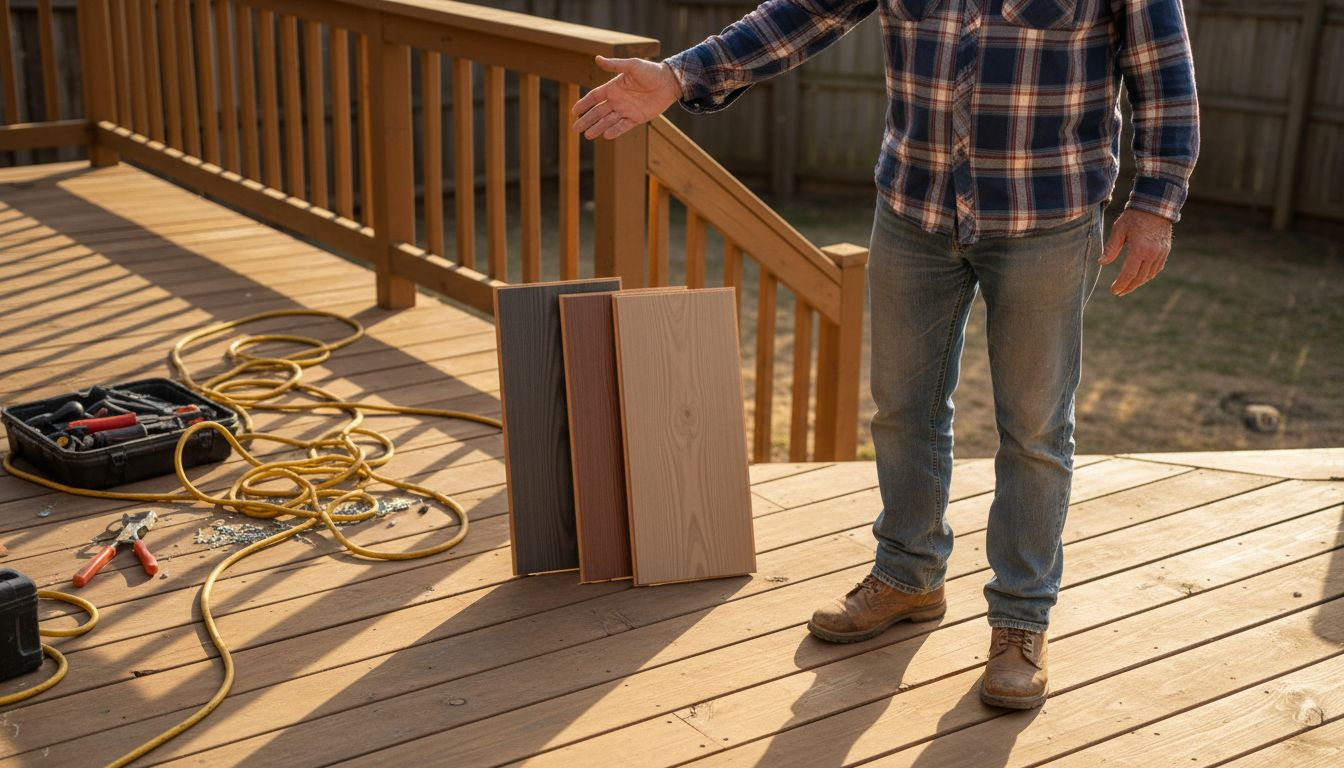
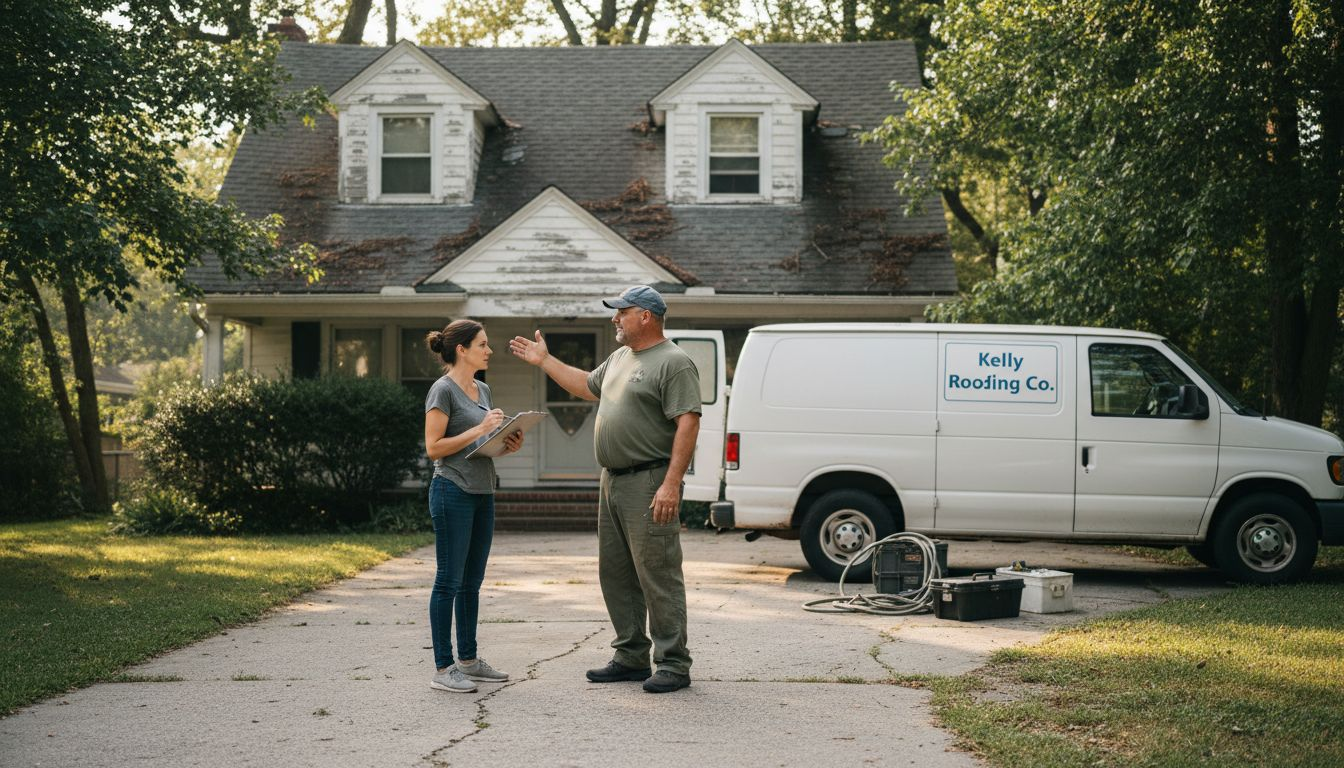
Beyond immediate safety considerations, successful roofing projects require mutual trust and proactive communication. Homeowners should actively engage with contractors, asking detailed questions about safety procedures and understanding the potential risks involved in roof work. Professional contractors, in turn, must demonstrate a commitment to transparency, providing clear explanations of their safety protocols and ensuring that every team member understands and follows established guidelines.
Ultimately, roofing safety is a shared responsibility that extends far beyond checklists and regulations. It represents a fundamental commitment to protecting human lives, preserving property integrity, and maintaining professional standards. By fostering a collaborative approach that prioritizes communication, education, and proactive risk management, homeowners and contractors can create safer, more efficient roofing experiences that minimize potential hazards and maximize project success.
Protect Your Home and Workers with Trusted Roofing Safety Expertise
Roofing safety is not just a guideline it is a vital commitment to protecting lives and property from serious risks such as falls and equipment hazards outlined in our detailed article. At J. A. Kelly Contracting Services we understand the challenges of complying with Canadian roofing safety standards while ensuring each project meets top quality. We address key concerns by prioritizing protective equipment and rigorous training so you can trust your roofing investments are secure.
Ready to experience roofing services where safety meets craftsmanship Explore our Roofing Archives – J. A. Kelly Contracting Services to learn how our team implements legal safety requirements and best practices in every job. Visit our Home Renovation Archives – J. A. Kelly Contracting Services for comprehensive home improvement solutions. Don’t wait until risks escalate contact us today through https://jakellycontractingservices.ca for your free inspection and safeguard your home with professional care.
Frequently Asked Questions
What are the main roofing safety standards that workers must follow?
Roofing safety standards focus on fall protection, equipment maintenance, and comprehensive training programs. Key measures include using personal fall arrest systems, installing guardrails, and maintaining safety nets.
Why is fall protection considered the most significant concern in roofing safety?
Falls account for a substantial percentage of serious injuries in construction. Implementing effective fall protection systems is essential to safeguard workers from potential accidents.
What types of protective equipment are necessary for roofing professionals?
Essential protective equipment includes hard hats, safety footwear, protective eyewear, high-visibility clothing, specialized work gloves, and knee pads for comfort during extended work periods.
What risks do roofing companies face if they ignore safety protocols?
Ignoring safety protocols can lead to fatal accidents, financial penalties, legal liabilities, increased insurance costs, and damage to a company’s reputation, ultimately affecting future business opportunities.
Recommended
- Role of Roofing Certifications – Why Homeowners Benefit – J. A. Kelly Contracting Services
- Roofing Terminology Explained: Speak Like a Roofer – J. A. Kelly Contracting Services
- Complete Guide to the Role of Roofing Contractors – J. A. Kelly Contracting Services
- Roof Repair Guide: Step-by-Step Fixes for Homeowners – J. A. Kelly Contracting Services