









Every year, american homeowners pour billions of dollars into renovation projects, yet misunderstandings and disputes still derail far too many improvements. Without a solid renovation contract in place, even the most exciting updates can lead to confusion and financial setbacks. Learning how these agreements work sets you up to protect your investment, avoid common pitfalls, and confidently manage your next home upgrade from start to finish.
Table of Contents
- Defining A Renovation Contract And Its Purpose
- Types Of Renovation Contracts Used In Home Projects
- Key Elements And Clauses In Every Agreement
- Legal Requirements And Compliance Standards
- Homeowner Rights, Risks, And Common Pitfalls
Key Takeaways
| Point | Details |
|---|---|
| Importance of Renovation Contracts | A renovation contract establishes clear expectations and responsibilities between homeowners and contractors, minimizing misunderstandings. |
| Types of Contracts | Choose from contract types like Lump Sum, Unit Price, and Cost-Plus, depending on project complexity and budget. |
| Legal Compliance | Ensure adherence to local building codes, permit requirements, and insurance coverage to avoid legal issues. |
| Homeowner Awareness | Be proactive in understanding rights and potential pitfalls, such as vague details and insufficient insurance coverage. |
Defining a Renovation Contract and Its Purpose
A renovation contract is a legally binding document that serves as a critical roadmap for home improvement projects, establishing clear expectations and responsibilities between homeowners and contractors. This essential agreement outlines the specific scope of work, project timeline, materials to be used, total costs, payment schedule, and potential contingencies that might arise during the renovation process.
According to Royal Institute of British Architects, selecting the appropriate contract is fundamental, as it ensures that all project requirements are precisely documented and understood by both parties. A well-crafted renovation contract protects both the homeowner and contractor by providing a structured framework that minimizes misunderstandings and potential disputes.
The primary purposes of a renovation contract include:
- Defining the exact project scope and specific work to be completed
- Establishing a clear and binding payment structure
- Outlining project timelines and milestones
- Specifying quality standards for materials and workmanship
- Providing legal protection for both parties
- Detailing change order procedures for unexpected modifications

By creating a comprehensive renovation contract, homeowners can approach their home improvement projects with confidence, knowing that all critical aspects of the work are professionally documented and legally protected. Learn more about contractor relationships in our guide on hiring contractors.
Types of Renovation Contracts Used in Home Projects
Home renovation projects require specific contract types that address the unique complexities of construction work. According to the American Journal of Engineering Research, three primary contract structures dominate the residential renovation landscape: Unit Price Contracts, Lump Sum Contracts, and Cost-Plus Contracts. Each type offers distinct advantages and risk allocations that can significantly impact project management and financial outcomes.
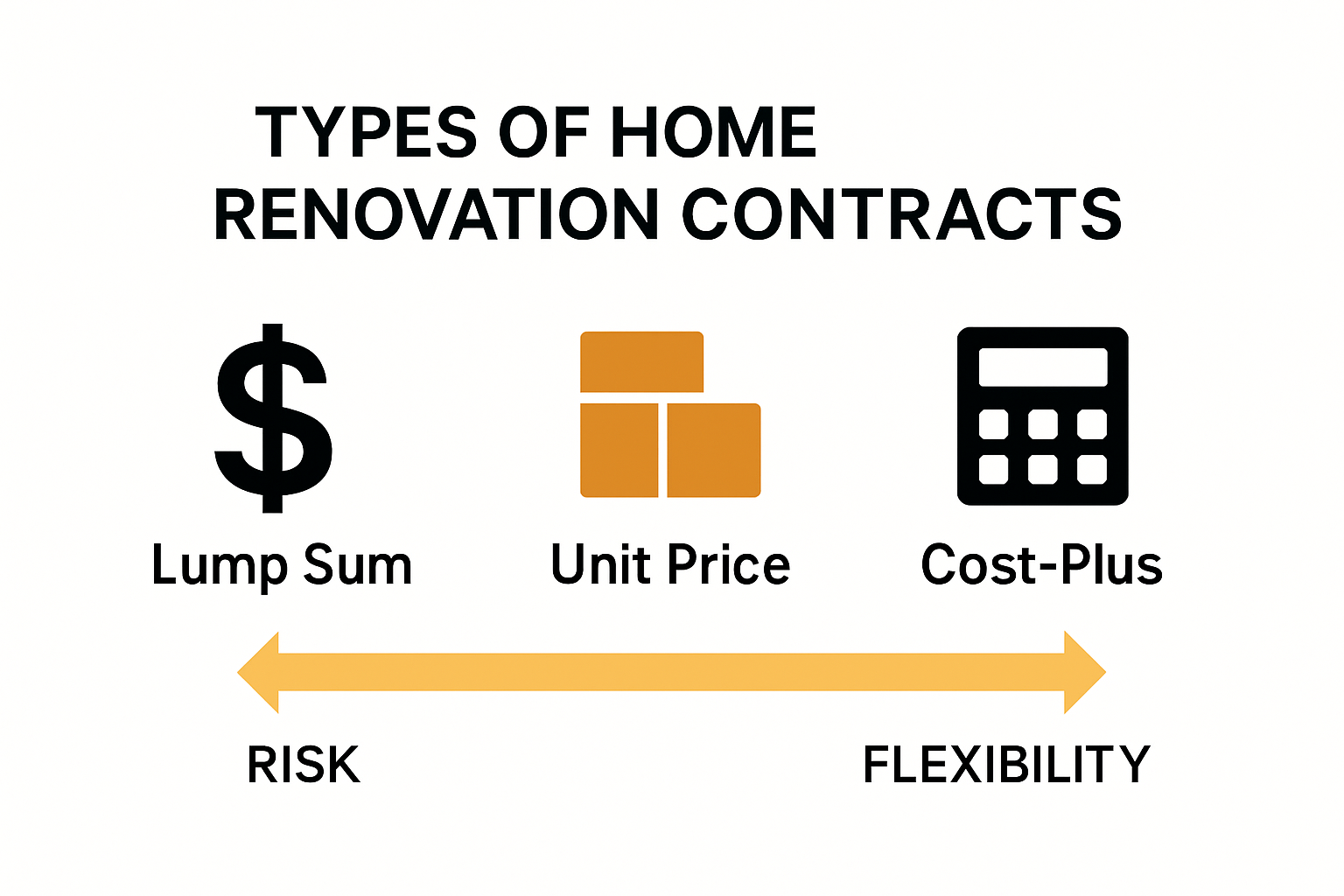
Lump Sum Contracts represent the most straightforward approach, where contractors provide a fixed total price for the entire renovation project. This contract type offers homeowners clear cost predictability and minimizes financial surprises. Contractors assume more risk by committing to a set price, which incentivizes efficient project management and precise initial planning.
Alternative contract structures provide more flexibility for complex renovation scenarios. University of California Facilities Manual highlights different contract approaches that can be adapted to specific project needs:
- Unit Price Contracts: Payment based on specific quantities of work completed
- Cost-Plus Contracts: Homeowner reimburses actual project costs plus a predetermined contractor fee
- Multiple Prime Contracts: Involves separate contracts for different aspects of the renovation
Choosing the right contract type depends on project complexity, budget constraints, and desired level of homeowner involvement.
Learn more about renovation planning in our comprehensive home renovation guide, which can help you navigate these critical decisions with confidence.
Key Elements and Clauses in Every Agreement
A comprehensive renovation contract serves as the backbone of successful home improvement projects, protecting both homeowners and contractors through meticulously drafted legal provisions. Royal Institution of Chartered Surveyors emphasizes the critical importance of including specific clauses that clearly define project parameters, expectations, and potential contingencies.
Essential contract elements typically include detailed specifications that leave no room for ambiguity. According to MIT’s Community Contracting guide, using clear and simple language is paramount to ensuring all parties fully understand their roles, responsibilities, and the project’s precise scope. This approach minimizes potential misunderstandings and creates a solid foundation for project communication.
Key clauses that should be included in every renovation contract are:
- Project Scope: Detailed description of all work to be completed
- Payment Terms: Specific payment schedule, amounts, and conditions
- Timeline: Exact start and completion dates, including milestone deadlines
- Change Order Procedures: Process for handling unexpected modifications
- Material Specifications: Exact materials to be used, including brands and quality standards
- Warranty and Guarantee Clauses: Duration and coverage of workmanship warranties
- Termination Conditions: Circumstances under which either party can end the contract
Navigating the complexities of renovation contracts requires careful attention to detail and a comprehensive understanding of legal protections. Learn more about the role of contracts in renovation with our detailed guide, which can help you approach your home improvement project with confidence and clarity.
Legal Requirements and Compliance Standards
Renovation contracts must navigate a complex landscape of legal requirements that protect both homeowners and contractors from potential disputes and financial risks. United Nations Industrial Development Organization emphasizes the critical importance of adhering to comprehensive compliance standards that govern construction and renovation projects, ensuring transparency and legal protection for all parties involved.
The legal framework surrounding renovation contracts encompasses multiple levels of regulatory compliance, including local building codes, zoning regulations, permit requirements, and industry-specific standards. National Institute of Standards and Technology highlights the necessity of establishing clear contractual agreements that explicitly outline each party’s legal obligations and potential liabilities. These standards serve as a critical safeguard against potential misunderstandings and legal complications.
Key legal compliance considerations include:
- Building Permit Verification: Ensuring all necessary municipal permissions are obtained
- Insurance Requirements: Documenting contractor’s liability and worker’s compensation coverage
- Safety Regulation Compliance: Adhering to local and national construction safety standards
- Tax Documentation: Proper reporting of labor and materials for tax purposes
- Licensing Verification: Confirming contractor’s professional credentials and legal authorization
- Workplace Safety Regulations: Following occupational health and safety guidelines
Explore our comprehensive guide on contractor relationships to understand more about legal protections and ensure a smooth, legally compliant renovation process.
Homeowner Rights, Risks, and Common Pitfalls
Home renovation projects involve significant financial and legal complexities that can expose homeowners to unexpected challenges and potential risks. complexml.org emphasizes the critical importance of securing comprehensive insurance coverage before initiating any renovation work, highlighting Builder’s Risk Coverage and General Liability as essential protections against potential financial and structural risks.
Understanding your rights as a homeowner requires a proactive approach to managing renovation contracts and potential complications. International Renewable Energy Agency recommends exploring financial instruments like public-private partnerships and loan guarantees that can provide additional layers of protection and risk mitigation during home improvement projects. These strategies help homeowners navigate potential financial uncertainties and protect their investment.
Common pitfalls homeowners should be aware of include:
- Inadequate Contract Details: Vague project specifications leading to scope creep
- Insufficient Insurance Coverage: Gaps in contractor and property protection
- Unrealistic Budget Expectations: Failing to account for unexpected expenses
- Poor Communication: Lack of clear ongoing dialogue with contractors
- Incomplete Permit Documentation: Risking legal and structural compliance issues
- Hasty Decision Making: Selecting contractors without proper background checks
Learn more about protecting yourself during home renovations with our comprehensive guide on hiring contractors, which can help you avoid common mistakes and ensure a smooth renovation experience.
Secure Your Renovation Success with a Clear Contract and Expert Support
Understanding the complexities of a renovation contract is key to avoiding costly misunderstandings and keeping your home improvement project on track. The article highlights challenges like vague project scopes, unclear payment terms, and insufficient legal protections that can put your investment and peace of mind at risk. If you want to ensure your renovation follows a clear timeline, uses quality materials, and safeguards your homeowner rights, having a trusted contractor by your side is essential.
Take control of your home renovation with confidence by working with experienced professionals who prioritize transparent agreements and quality craftsmanship. Explore how our team at J. A. Kelly Contracting Services can guide you through every step of your project, starting with a solid renovation contract that protects your interests. Discover expert insights and real client stories in our Home Renovation Archives and learn why clear contracts lead to successful renovations. Don’t wait until problems arise. Contact us now to get your free estimate and move forward with a plan you can trust.
Frequently Asked Questions
What is the purpose of a renovation contract?
A renovation contract serves as a legally binding document that outlines the expectations and responsibilities between homeowners and contractors. It defines the project scope, payment structure, timelines, materials used, and provides legal protection for both parties.
What are the main types of renovation contracts?
The main types of renovation contracts include Lump Sum Contracts, Unit Price Contracts, and Cost-Plus Contracts. Each type has different advantages and is suitable for varying project complexities and financial structures.
What should be included in a renovation contract?
A renovation contract should include essential elements such as project scope, payment terms, timeline, change order procedures, material specifications, warranty clauses, and termination conditions to ensure clarity and legality throughout the project.
How can homeowners protect their rights in a renovation contract?
Homeowners can protect their rights by ensuring that the renovation contract includes detailed specifications, complies with legal requirements, confirms proper insurance and permits, and includes clear communication channels with the contractor to avoid misunderstandings.
Recommended
- Role of Contracts in Renovation: Complete Guide – J. A. Kelly Contracting Services
- What Is Home Renovation? Complete Guide for Homeowners – J. A. Kelly Contracting Services
- Why Hire a Contractor: Complete Homeowner Guide – J. A. Kelly Contracting Services
- What Is Bathroom Renovation? Complete Overview – J. A. Kelly Contracting Services