

Choosing the right decking material in Moncton can mean years of comfort or constant repairs. With local weather swinging from icy winters to humid summers, homeowners need options that balance durability, beauty, and low maintenance. This guide highlights outstanding choices from natural wood to advanced composite and modified wood, focusing on critical performance factors like decay resistance and long-term value so your new or upgraded deck stands up to New Brunswick’s climate for years to come.
Table of Contents
- Defining Decking Materials In Residential Builds
- Comparing Wood, Composite, And Alternative Decking
- Durability, Maintenance, And Weather Resistance
- Safety Standards And Regional Climate Impacts
- Evaluating Long-Term Costs And Common Pitfalls
Key Takeaways
| Point | Details |
|---|---|
| Material Selection Matters | Different decking materials, such as natural wood and synthetic options, significantly influence performance and aesthetics. Homeowners should evaluate their specific environmental conditions and aesthetic goals when choosing materials. |
| Cost vs. Long-Term Value | Initial costs for decking materials can be misleading. Quality materials may have a higher upfront cost but save money on maintenance and repairs over time. |
| Maintenance Is Key | Regular maintenance is crucial for wood decking to prevent decay and preserve aesthetics. Composite materials generally require less maintenance, making them a practical choice for busy homeowners. |
| Adhere to Local Building Codes | Understanding and complying with building codes is essential for safety and durability, especially in regions like Moncton that face variable climate conditions. Consult local professionals for guidance on appropriate materials and construction methods. |
Defining Decking Materials in Residential Builds
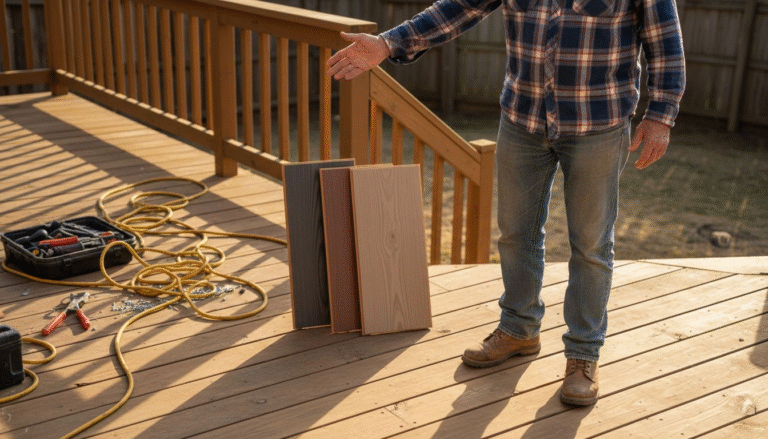
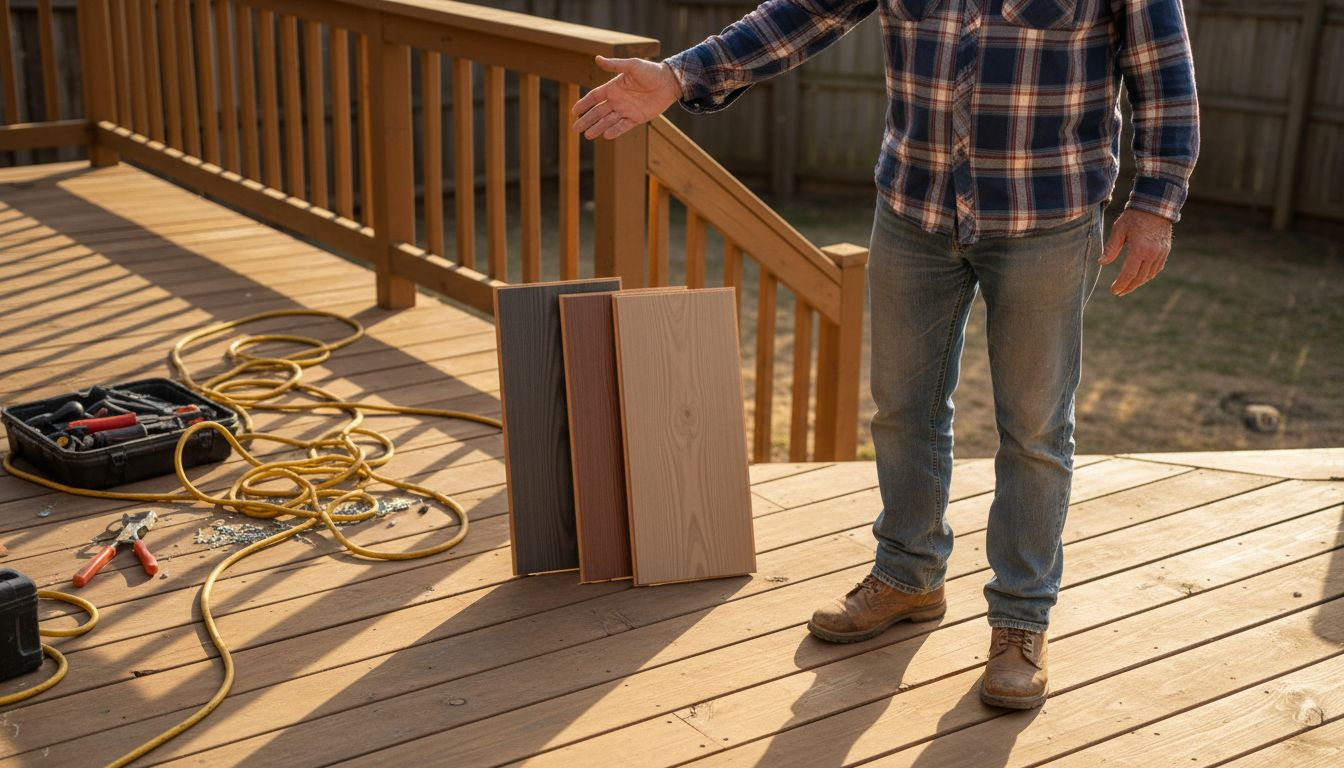
Outdoor decks represent complex architectural elements where material selection dramatically impacts performance, aesthetics, and long-term value. Residential decking materials range from traditional natural woods to sophisticated synthetic alternatives, each offering unique characteristics that influence durability and design potential.
Natural wood species provide classic aesthetic appeal and renewable qualities, with options including:
- Redwood: Naturally rot-resistant
- Teak: Exceptional weather durability
- Mahogany: Rich color and dense grain structure
- Ipe: Extremely hard tropical hardwood
Synthetic decking materials represent technological advances in outdoor construction, delivering enhanced performance characteristics. These engineered solutions include traditional composites, premium capped composites, and cellular PVC, which offer superior dimensional stability and reduced maintenance requirements.
The selection process for decking materials involves evaluating critical performance factors such as:
- Decay resistance
- Thermal stability
- Tensile strength
- Cost considerations
- Lifecycle environmental impact
Each material brings distinct advantages, requiring homeowners to balance aesthetic preferences with practical performance metrics. Synthetic options typically provide more consistent performance, while natural woods deliver unmatched organic beauty.
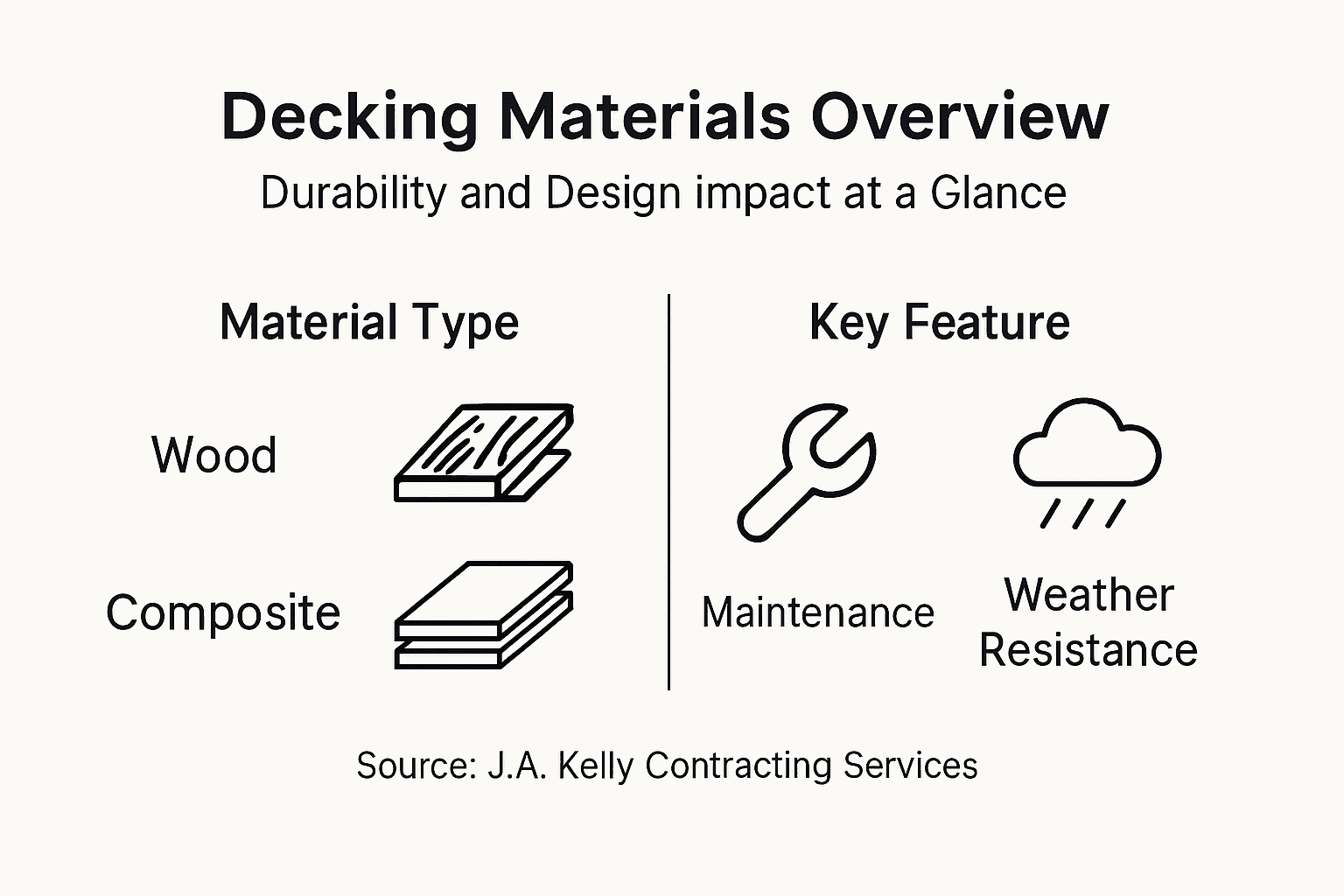
Here’s a concise comparison of decking material categories and their key benefits for homeowners:
| Material Type | Appearance | Maintenance Level | Environmental Impact |
|---|---|---|---|
| Natural Wood | Warm, unique grain | High | Often renewable, biodegradable |
| Composite | Uniform, modern finish | Low | Uses recycled plastic, less waste |
| Cellular PVC | Smooth, engineered look | Very low | Longer lifespan, non-biodegradable |
| Modified Wood | Natural yet enhanced | Medium | Improved durability, lower chemical use |
Pro tip: Consult local building professionals who understand regional climate challenges and can recommend materials specifically suited to Moncton’s unique environmental conditions.
Comparing Wood, Composite, and Alternative Decking
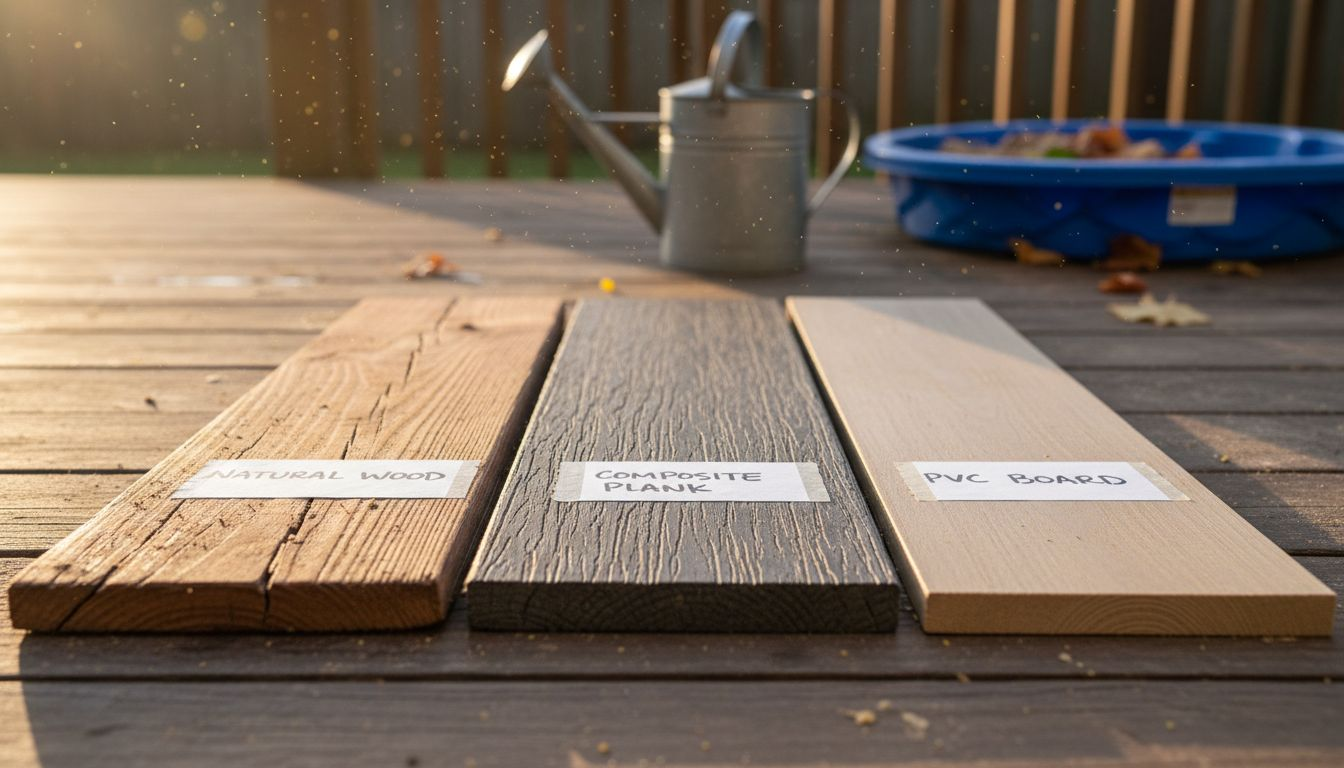
Wood decking remains a timeless choice for homeowners seeking natural aesthetic appeal. Comparative decking materials reveal distinct characteristics that influence long-term performance and maintenance requirements. Traditional hardwoods like ipe and cedar offer classic beauty but demand consistent upkeep to maintain their structural integrity and appearance.
Composite decking materials present a modern alternative with significant advantages:
- Low maintenance requirements
- Superior resistance to rot and warping
- Longer durability compared to natural wood
- Higher initial cost investment
- Consistent aesthetic appearance
Alternative decking solutions expand beyond traditional wood and composite options. Modified wood technologies represent an innovative middle ground, providing enhanced moisture resistance and structural stability. These engineered materials combine the organic charm of natural wood with advanced processing techniques that improve overall performance.
Key comparative factors for decking material selection include:
- Initial installation cost
- Long-term maintenance expenses
- Durability and lifespan
- Aesthetic preferences
- Environmental sustainability
- Climate adaptability
Moisture-prone environments particularly benefit from alternative decking materials like PVC, which offer exceptional water resistance and minimal maintenance requirements. Homeowners must carefully evaluate their specific environmental conditions and aesthetic goals when selecting the most appropriate decking solution.
Pro tip: Consult local decking professionals who can assess your specific site conditions and recommend the most suitable material for Moncton’s unique climate and terrain.
Durability, Maintenance, and Weather Resistance
Wood decking durability depends critically on understanding environmental challenges and proactive maintenance strategies. Decking performance factors reveal complex interactions between material properties and climate exposure that significantly impact long-term structural integrity.
Wood decking maintenance requires comprehensive protection against environmental stressors:
- Regular water repellent treatments
- Annual sealing and protective coating applications
- Prompt repair of surface damages
- Consistent cleaning to prevent moisture retention
- Strategic design to minimize water accumulation
Composite decking materials offer superior weather resistance with engineered characteristics that address traditional wood limitations. These advanced materials provide enhanced protection through:
- Built-in moisture barriers
- UV stabilization technologies
- Resistance to mold and fungal growth
- Consistent dimensional stability
- Minimal maintenance requirements
Weather exposure presents unique challenges for outdoor decking materials. Thermal modification and specialized treatments can dramatically improve wood’s natural resistance to decay, extending its functional lifespan and maintaining aesthetic appeal. Homeowners must carefully evaluate their specific environmental conditions when selecting decking materials.
Proactive maintenance is more cost-effective than extensive repairs or complete deck replacement.
Pro tip: Schedule annual professional deck inspections to identify potential moisture damage or structural weaknesses before they become expensive repair projects.
Safety Standards and Regional Climate Impacts
Building code regulations play a critical role in ensuring deck safety and performance across diverse environmental conditions. Climate resilience standards have become increasingly sophisticated, addressing the complex challenges posed by changing weather patterns and regional climate variations.
Key safety considerations for decking in New Brunswick’s climate include:
- Structural load-bearing capacity
- Moisture resistance requirements
- Temperature expansion tolerances
- Wind and snow load specifications
- Material performance under extreme conditions
Regional building codes mandate specific design requirements that account for unique climatic challenges. In Moncton’s variable climate, decks must withstand significant temperature fluctuations, from harsh winter freezes to humid summer conditions. Thermal expansion and contraction become critical factors in material selection and construction techniques.
The safety standards for residential decking encompass multiple protective dimensions:
- Structural integrity assessments
- Material durability certifications
- Load-bearing performance tests
- Weather resistance evaluations
- Long-term environmental adaptation
Compliance with local building codes is not optional—it’s essential for ensuring occupant safety and structural longevity.
Pro tip: Consult with local building inspectors to understand specific regional requirements for deck construction in New Brunswick’s unique climate conditions.
Evaluating Long-Term Costs and Common Pitfalls
Deck investment strategies require comprehensive analysis beyond initial installation expenses. Decking material cost evaluation reveals complex financial considerations that extend far beyond the initial purchase price, particularly in regions with challenging climate conditions like Moncton.
Critical cost factors homeowners must consider include:
- Initial material purchase costs
- Professional installation expenses
- Annual maintenance requirements
- Potential repair and replacement frequencies
- Long-term durability projections
Pressure-treated wood presents an attractive initial investment, but hidden expenses can accumulate rapidly. Homeowners often underestimate the ongoing maintenance costs associated with traditional wood decking, which may include:
- Regular staining and sealing
- Pest prevention treatments
- Replacement of damaged boards
- Structural reinforcement
- Climate-related restoration work
Composite decking materials, while more expensive upfront, offer significant long-term financial advantages. These engineered solutions minimize maintenance expenses and provide more predictable performance over the deck’s lifetime.
The following table summarizes financial considerations for deck investments over their lifecycle:
| Cost Factor | Pressure-Treated Wood | Composite Decking | PVC/Alternative |
|---|---|---|---|
| Initial Purchase | Lowest | Moderate to high | Highest |
| Annual Maintenance | Frequent, labor-intensive | Minimal | Negligible |
| Repair Frequency | High | Rare | Very rare |
| Long-Term Value | May decrease over time | Maintains longer | Highest retention |
Investing in quality materials upfront can save thousands in future repair and replacement costs.
Pro tip: Calculate the total lifecycle cost of your decking material, not just the initial installation price, to make a truly informed investment decision.
Enhance Your Deck’s Durability and Design with Expert Craftsmanship
Choosing the right decking materials can be overwhelming, especially when balancing durability, maintenance, and aesthetic appeal. This article highlights critical factors like moisture resistance, maintenance demands, and climate adaptability that every homeowner in Moncton, New Brunswick, must consider. Common challenges include protecting your investment from harsh weather while achieving the style that complements your home.
At J. A. Kelly Contracting Services, we specialize in residential projects where material selection and expert installation come together to create beautiful, long-lasting decks tailored to your needs. Whether you prefer natural wood, composite, or innovative alternatives, our team ensures every detail meets local building codes and withstands regional climate conditions. Discover how our Home Renovation Archives – J. A. Kelly Contracting Services can inspire your next project.
Don’t let uncertainty about decking materials hold you back from enhancing your outdoor space. Contact us today at jakellycontractingservices.ca for a personalized consultation and free estimate. Experience quality craftsmanship and peace of mind with professionals who understand Moncton’s unique environment. Take the first step toward a durable, beautiful deck built to last.
Frequently Asked Questions
What are the main types of decking materials available for residential builds?
Natural wood species, composite materials, cellular PVC, and modified wood are the primary types of decking materials used in residential construction.
How do natural wood and composite decking differ in terms of maintenance requirements?
Natural wood typically requires higher maintenance, including regular sealing and staining, while composite decking generally has lower maintenance needs, requiring less frequent upkeep.
What impact do climate conditions have on the durability of decking materials?
Climate factors can significantly affect decking materials, with moisture-prone environments favoring moisture-resistant options like PVC, while varying temperatures can influence the thermal stability of wood and composites.
What are the long-term cost considerations associated with different decking materials?
Long-term costs include initial purchase price, maintenance expenses, repair frequencies, and overall durability, with composite materials often providing savings on maintenance compared to natural wood.
Recommended
- Complete Guide to Roof Decking for Homeowners – J. A. Kelly Contracting Services
- What Is Deck Construction and Why It Matters – J. A. Kelly Contracting Services
- What Is Deck Resurfacing and Why It Matters – J. A. Kelly Contracting Services
- Deck Installation Guide for Durable Outdoor Spaces – J. A. Kelly Contracting Services
- Betonlook Tegels | Moderne Tegels voor Vloer & Wand