



Coordinating a home renovation in Moncton often means juggling timelines, contractor schedules, and budget planning all at once. For homeowners, knowing when each phase will take place and how long it should last is crucial to reducing stress and managing expectations. A well-crafted renovation timeline gives you strategic control over project milestones and safety compliance, helping turn overwhelming decisions into clear steps toward a successful transformation.
Table of Contents
- What Is A Renovation Timeline?
- Key Phases Of A Renovation Project
- Typical Duration For Different Renovations
- Factors That Impact Your Project Timeline
- Common Delays And How To Prevent Them
Key Takeaways
| Point | Details |
|---|---|
| Establish a Renovation Timeline | Create a structured timeline to outline tasks, milestones, and durations to ensure effective project management. |
| Consider Project Phases | Understand the key phases of renovation, from planning to completion, to better allocate resources and manage time. |
| Anticipate Delays | Prepare for potential delays by including buffer time in your schedule and maintaining flexible plans. |
| Effective Communication | Foster open communication with contractors to quickly address issues and keep the project on track. |
What Is a Renovation Timeline?
A renovation timeline is a strategic project management tool that outlines the detailed sequence, duration, and specific tasks involved in transforming an existing structure. Renovation activities can range from minor repairs to comprehensive remodeling efforts that dramatically improve a home’s functionality and aesthetic appeal.
At its core, a renovation timeline serves several critical purposes for Moncton homeowners:
- Establishes clear project milestones and checkpoints
- Coordinates multiple contractors and subcontractors
- Tracks material procurement and delivery schedules
- Manages budget allocations across different project phases
- Anticipates potential delays and planning contingencies
The Environmental Protection Agency notes that renovation timelines are essential for tracking activities that modify existing structures, including critical safety considerations like managing potential lead exposure during home improvement projects.
Typically, a comprehensive renovation timeline includes multiple interconnected phases:
- Initial project planning and design
- Permit acquisition and regulatory approvals
- Demolition and preparatory work
- Core construction and renovation
- Final inspections and project completion
Each phase requires meticulous coordination, with potential durations varying based on project complexity, scope, and unexpected challenges that may arise during home renovations.
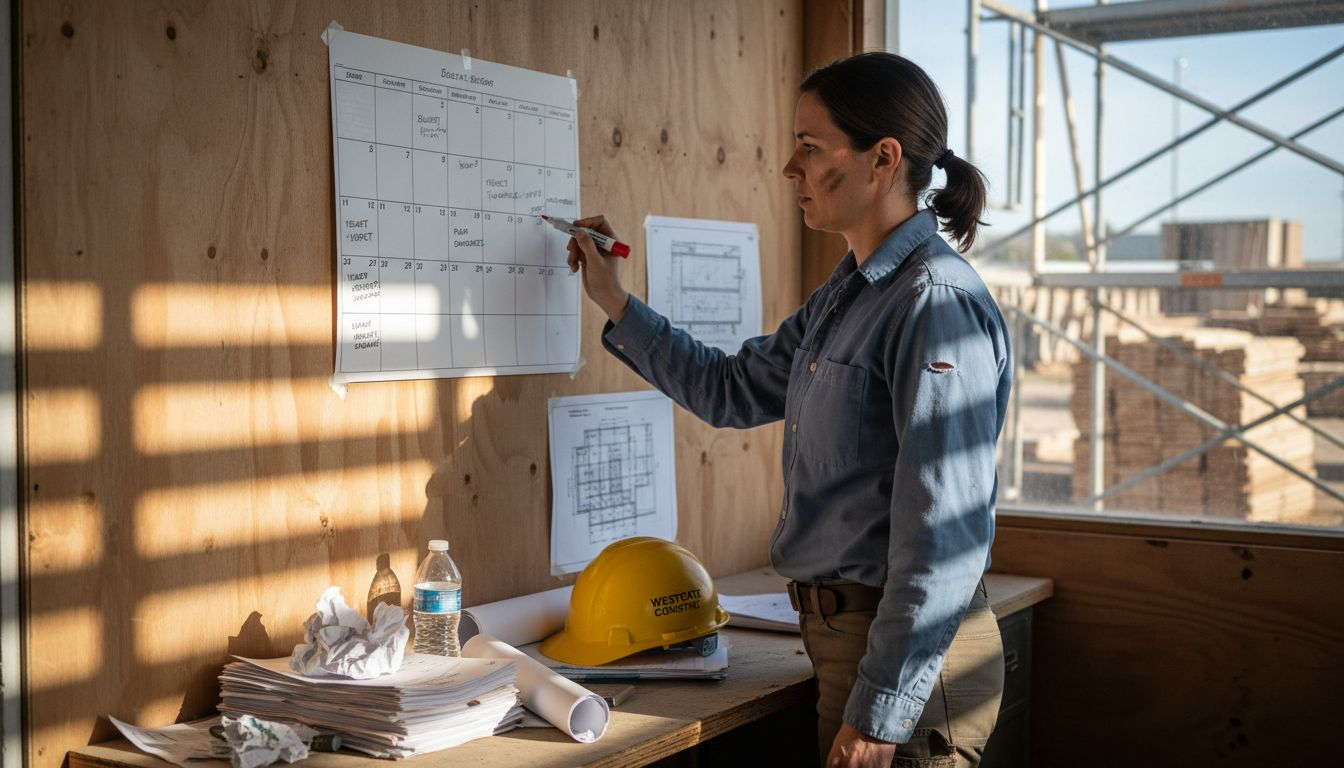
Pro tip: Create a flexible renovation timeline that allows for 15-20% additional time as a buffer against unexpected complications or work delays.
Key Phases of a Renovation Project
A successful home renovation requires understanding the strategic phases that transform your living space from concept to completion. Major renovation projects involve carefully coordinated steps that ensure quality, efficiency, and optimal outcomes for Moncton homeowners.
The primary phases of a comprehensive renovation typically include:
- Project Initiation: Defining scope, budget, and project goals
- Existing Conditions Analysis: Evaluating current structure and potential challenges
- Design Development: Creating detailed plans and architectural drawings
- Permitting: Securing necessary regulatory approvals
- Construction: Executing physical renovation work
- Final Inspection: Verifying project completion and quality standards
Capital renovation projects demand meticulous planning across multiple interconnected stages. Each phase requires specific expertise, from initial conceptualization to final walkthrough.
Detailed breakdown of key renovation phases:
Here’s a comparison of renovation phases and the type of expertise they require:
| Renovation Phase | Key Expertise Needed | Typical Activities |
|---|---|---|
| Planning & Feasibility | Project management | Objective setting, budgeting |
| Design Development | Architects, designers | Plan creation, material choices |
| Pre-Construction Prep | Legal, contracting | Permit review, team selection |
| Active Construction | Skilled trades, supervision | Building, quality control |
| Project Completion | Inspectors, coordinators | Inspections, documentation |
- Planning and Feasibility Assessment
- Determine project objectives
- Establish budget constraints
- Conduct initial property evaluation
- Comprehensive Design Phase
- Develop architectural plans
- Select materials and finishes
- Create detailed project specifications
- Pre-Construction Preparation
- Obtain necessary permits
- Select and contract professional teams
- Prepare work site
- Active Construction Period
- Execute renovation plans
- Manage ongoing quality control
- Address unexpected challenges
- Project Completion and Validation
- Conduct final inspections
- Perform quality assurance checks
- Complete project documentation
Successful renovations require flexibility, professional expertise, and thorough planning across all project phases.
Pro tip: Document every phase of your renovation project with detailed notes and photographs to track progress and manage potential future maintenance requirements.
Typical Duration for Different Renovations
Home renovation timelines vary dramatically depending on project complexity and scope. Renovation project durations range from quick weeks-long updates to extensive multi-month transformations that require intricate planning and execution.
Typical renovation timeframes for different home improvement projects include:
- Kitchen Renovation: 6-12 weeks
- Minor updates: 3-4 weeks
- Full remodel: 10-14 weeks
- Bathroom Renovation: 4-8 weeks
- Basic refresh: 2-3 weeks
- Complete overhaul: 6-10 weeks
- Whole Home Renovation: 3-9 months
- Partial home updates: 2-4 months
- Complete structural changes: 6-12 months
- Basement Finishing: 4-8 weeks
- Room Addition: 3-6 months
Construction and renovation timelines depend on multiple critical factors that can extend or compress project duration:
- Structural complexity
- Material availability
- Permit processing times
- Contractor scheduling
- Unexpected structural discoveries
Successful renovations require flexibility and realistic expectations about project timelines.
The actual duration of any renovation project involves multiple interconnected variables. Homeowners should anticipate potential delays and build buffer time into their planning to accommodate unexpected challenges.
Pro tip: Always add 15-25% additional time to your initial renovation timeline estimate to account for potential unexpected complications and delays.
Factors That Impact Your Project Timeline
Successful home renovation projects depend on understanding the complex variables that influence project duration. Project management factors play a critical role in determining how smoothly and quickly a renovation moves from concept to completion.
Key factors that can significantly impact your renovation timeline include:
- Scope and Complexity
- Project size and intricacy
- Structural modifications required
- Custom design elements
- Resource Availability
- Contractor scheduling
- Material procurement timelines
- Specialized trade professional availability
- Regulatory Requirements
- Permit processing times
- Local building code compliance
- Inspection schedules
Project management lifecycle considerations reveal multiple critical elements that can extend or compress renovation timelines:
- Initial Planning Depth
- Comprehensive preliminary assessments
- Detailed design specifications
- Anticipating potential challenges
- Communication Effectiveness
- Clear stakeholder expectations
- Regular progress updates
- Quick problem resolution
- Risk Management
- Contingency planning
- Budget flexibility
- Adaptive problem-solving
Unexpected challenges are inevitable in renovation projects. Successful homeowners maintain flexibility and proactive communication.
Understanding these factors helps Moncton homeowners set realistic expectations and develop strategies to mitigate potential timeline disruptions. Each renovation project is unique, requiring tailored approaches to manage time, budget, and quality effectively.
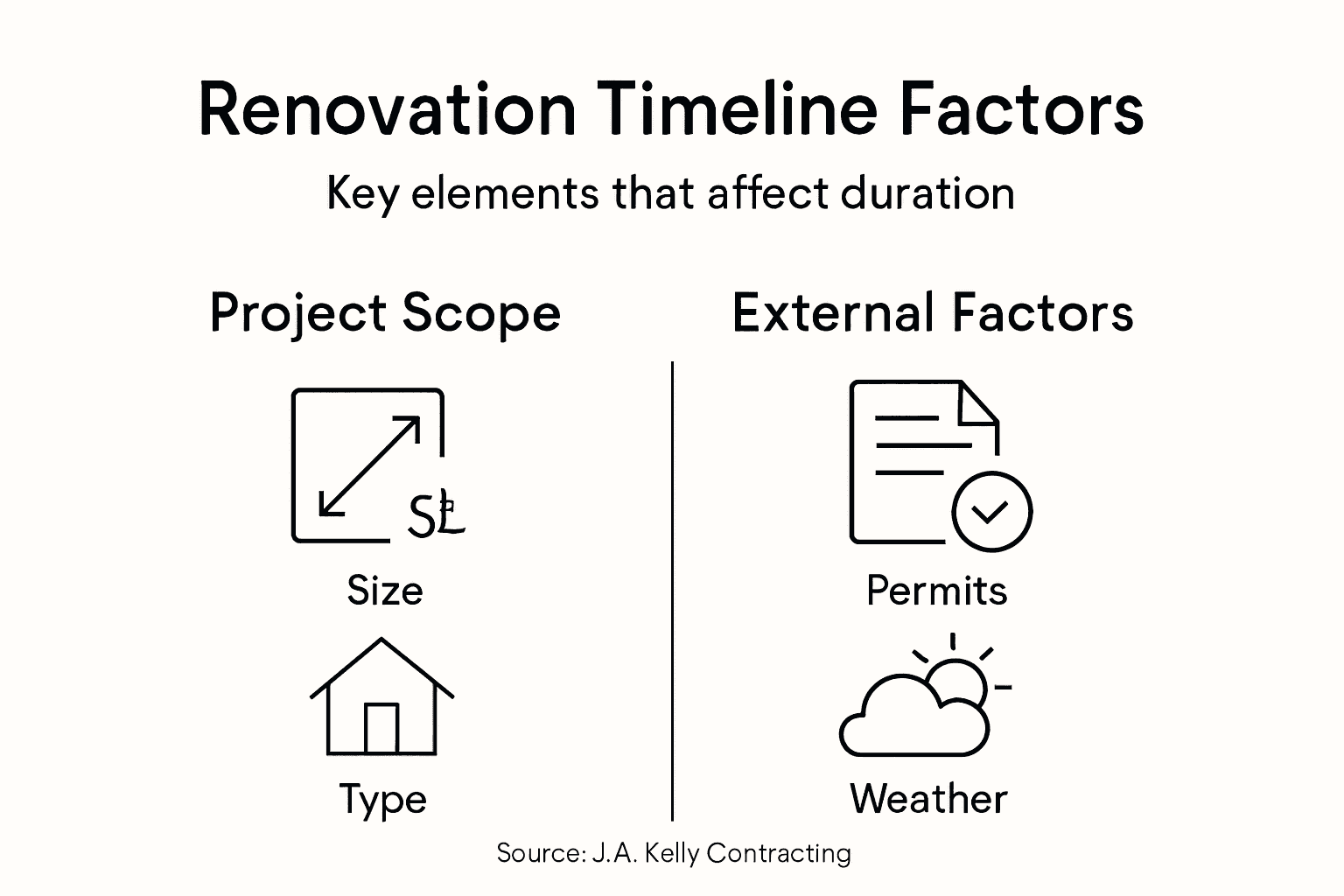
Quick reference: How project factors influence timeline extension or reduction.
| Project Factor | Timeline Impact | Example Influence |
|---|---|---|
| Scope & Complexity | Often extends | Large remodels take longer |
| Resource Availability | May extend or reduce | Delayed material shipment slows work |
| Regulatory Approval | Extends if complex | Slow permit processes cause delays |
| Communication Quality | Typically reduces | Quick problem resolution speeds up |
| Risk Management | Reduces with planning | Strong contingency plans minimize impact |
Pro tip: Create a detailed project communication plan that includes weekly check-ins with your contractor to quickly address any potential timeline complications.
Common Delays and How to Prevent Them
Every home renovation project faces potential unexpected complications that can derail timelines. Construction management experts emphasize that proactive planning is the most effective strategy for minimizing potential disruptions.
Most common renovation delays stem from several critical areas:
- Material Supply Issues
- Unexpected inventory shortages
- Shipping and logistics challenges
- Manufacturer production delays
- Labor and Workforce Challenges
- Skilled trade professional availability
- Scheduling conflicts
- Unexpected worker unavailability
- Regulatory and Permit Complications
- Slow municipal approval processes
- Complex code compliance requirements
- Unexpected documentation needs
Project delay prevention strategies reveal multiple approaches to mitigating potential timeline interruptions:
- Advanced Planning Techniques
- Create comprehensive project roadmaps
- Build buffer time into schedules
- Develop contingency scenarios
- Communication Protocols
- Regular contractor check-ins
- Transparent progress reporting
- Immediate problem escalation
- Risk Management Approaches
- Diversify material suppliers
- Maintain flexible design options
- Develop alternative workflow strategies
Successful renovation projects require adaptability, clear communication, and proactive problem-solving.
Understanding these potential delays helps Moncton homeowners develop more realistic expectations and create robust strategies to keep their renovation projects on track and within budget.
Pro tip: Maintain a dedicated project communication folder with all contracts, communications, and contingency plans to quickly address and document potential delay issues.
Manage Your Renovation Timeline with Trusted Experts
Understanding the challenge of creating and maintaining a clear renovation timeline is essential for every homeowner. Delays linked to material availability, permit approvals, or contractor scheduling can feel overwhelming. Your goal is to transform your home efficiently while minimizing uncertainty and unexpected costs. By partnering with experienced professionals who grasp the importance of detailed project phases and proactive communication, you can confidently navigate these complexities.
At J. A. Kelly Contracting Services, we specialize in helping Moncton homeowners plan and execute home renovation projects with precision and care. Our commitment to quality craftsmanship and transparent communication means your renovation stays on schedule from initial planning through final inspection. Explore our range of services in the Home Renovation Archives to see how we handle everything from small updates to larger structural changes, ensuring your expectations and timelines align.
Ready to avoid common renovation delays and keep your project on track? Contact us today at J. A. Kelly Contracting Services for a free consultation and experience home renovation confidence backed by local expertise and proven results. Your home transformation is just a call or click away.
Frequently Asked Questions
What is a renovation timeline?
A renovation timeline is a project management tool that outlines the sequence, duration, and specific tasks involved in transforming a structure, helping homeowners manage their renovation processes effectively.
Why is having a renovation timeline important for homeowners?
A renovation timeline helps homeowners establish clear milestones, coordinate contractors, track materials, manage budgets, and anticipate potential delays, ensuring a smoother renovation experience.
What are the typical phases of a renovation project?
The typical phases include project initiation, existing conditions analysis, design development, permitting, construction, and final inspection. Each phase is crucial for ensuring quality and efficiency.
How long do different types of renovations usually take?
Renovation durations vary by project type: kitchen renovations typically take 6-12 weeks, bathroom renovations take 4-8 weeks, whole home renovations can last 3-9 months, while basement finishing and room additions can take 4-6 months.
Recommended
- Renovation Timeline: How It Shapes Your Project Success – J. A. Kelly Contracting Services
- How to Plan Home Renovation: Step-by-Step Guide for Homeowners – J. A. Kelly Contracting Services
- 7 Key Advantages of Home Renovation for Homeowners – J. A. Kelly Contracting Services
- How to Budget Renovations for Maximum Value at Home – J. A. Kelly Contracting Services
- Understanding the Timeline for Moving House – Schott Removals