

Replacing your roof in Moncton means making decisions that directly impact your home’s durability and comfort through every season. Choosing the right secondary waterproofing layer beneath your shingles is not just about meeting building code—it’s the key to safeguarding your investment against moisture, leaks, and extreme weather. This guide helps you understand your roof’s hidden defenses, compare material options, and avoid common pitfalls so you can approach your renovation with confidence.
Table of Contents
- Roofing Underlayment Explained: Purpose And Definition
- Major Types Of Roofing Underlayment Materials
- How Underlayment Works To Protect Roofs
- Installation Methods And Best Practices
- Comparing Costs, Risks, And Common Errors
Key Takeaways
| Point | Details |
|---|---|
| Importance of Underlayment | Roofing underlayment is essential for protecting homes from moisture damage and prolonging roof lifespan. |
| Types of Underlayment | The three main types are Asphalt-saturated felt, Rubberized asphalt, and Synthetic underlayment, each varying in durability and waterproofing. |
| Installation Best Practices | Proper installation is crucial; following manufacturer guidelines and caring for roof details ensures optimal protection. |
| Cost and Risks | Investing in higher-quality underlayment can reduce long-term maintenance costs and risks associated with improper installation. |
Roofing underlayment explained: Purpose and definition
Roofing underlayment is a critical protective barrier installed beneath your home’s outer roofing materials. Its primary function is to provide a secondary waterproofing layer that shields your roof’s structural components from moisture damage. Roof protection systems depend on this crucial component to prevent water infiltration and extend the overall lifespan of your roofing system.
Typically positioned directly above the roof decking and underneath shingles or other exterior roofing materials, underlayment acts as a defensive shield against wind-driven rain, ice dams, and potential leaks. Modern underlayment materials are engineered to create a moisture barrier with enhanced performance characteristics, helping moderate temperature fluctuations and reducing potential damage from environmental stress.
The underlayment serves multiple critical functions beyond basic water resistance. It helps minimize wind uplift, provides temporary protection during roof installation, and contributes to the overall thermal and moisture management of your roofing system. Building codes in most regions require underlayment for pitched roofs, recognizing its essential role in protecting residential and commercial structures from potential water damage.
Pro tip: Always inspect your roof’s underlayment during replacement or repair to ensure it meets current building standards and provides comprehensive protection for your home.
Major types of roofing underlayment materials
Roofing underlayment comes in three primary materials, each offering unique protective characteristics for homeowners. Roofing underlayment types range from traditional to modern solutions, designed to provide comprehensive protection against moisture and environmental challenges.
Asphalt-saturated felt represents the traditional underlayment option, often called roofing felt. This material provides basic water resistance but has limitations in durability. Rubberized asphalt underlayment offers a significant upgrade, featuring self-sealing properties around fasteners and superior waterproofing capabilities. It creates a robust barrier that adapts to roof movements and temperature variations.
Synthetic underlayment has emerged as the most advanced option in modern roofing systems. Constructed from engineered polymers, synthetic materials provide exceptional strength, lightweight performance, and superior resistance to tearing and ultraviolet degradation. Professionals increasingly recommend synthetic underlayment for its long-term durability and consistent protective performance across various climate conditions.
Pro tip: When selecting underlayment, prioritize material compatibility with your specific roofing system and local climate conditions to ensure maximum protection and longevity.
Here is a quick comparison of roofing underlayment types and their key characteristics:
| Underlayment Type | Durability | Waterproofing Level | Installation Complexity |
|---|---|---|---|
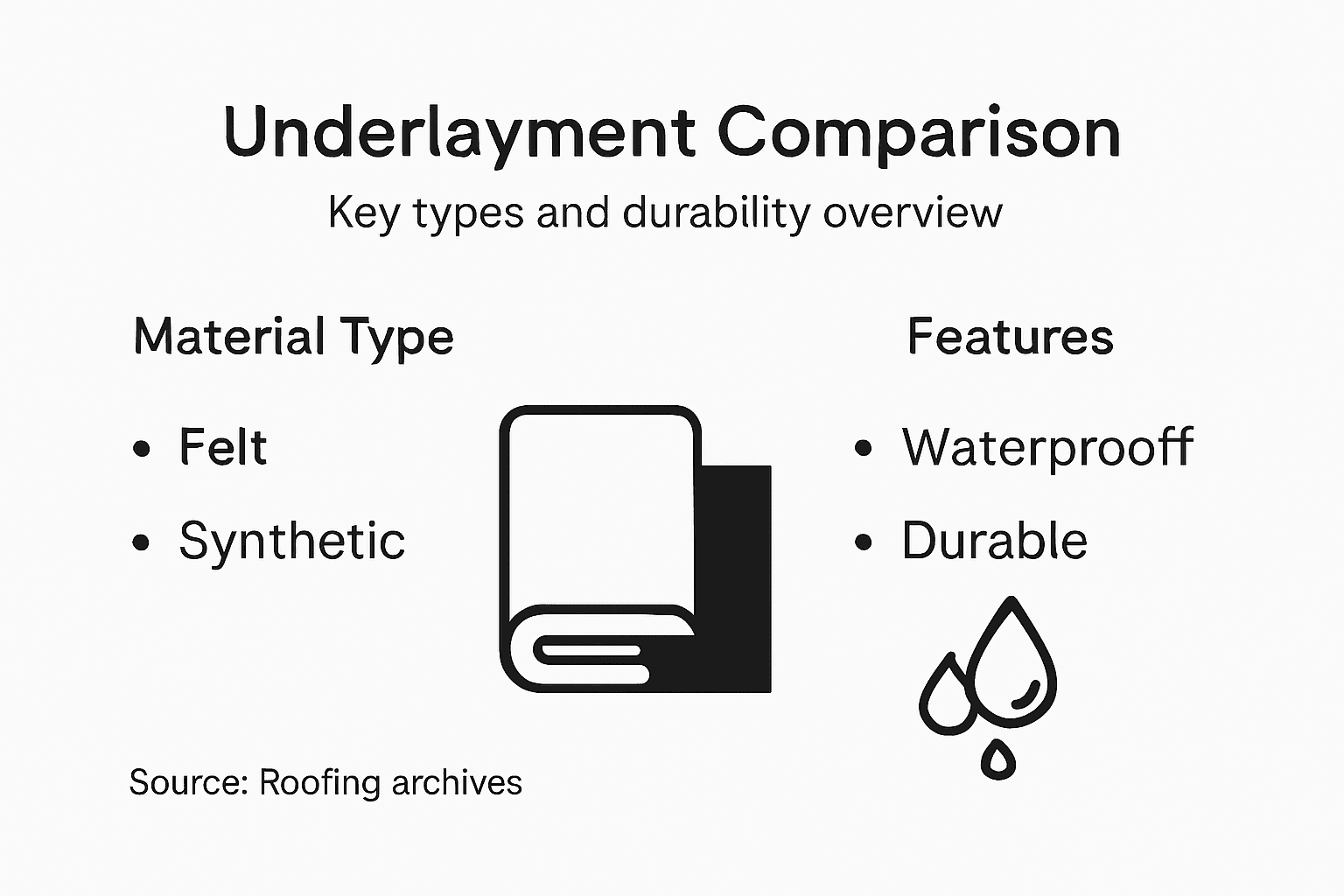
| Asphalt-saturated felt | Moderate (5-15 yrs) | Basic moisture barrier | Easy, familiar to roofers |
| Rubberized asphalt | High (15-25 yrs) | Superior, self-sealing | Moderate, precise application |
| Synthetic | Very high (20+ yrs) | Excellent, UV resistant | Easy to moderate, lightweight |
How underlayment works to protect roofs
Roof underlayment functions as a critical defensive barrier, working silently to protect your home from potentially devastating water damage. Secondary water protection operates by creating an additional layer of defense beneath your primary roofing materials, intercepting moisture before it can penetrate your home’s structural components.
The protective mechanism involves multiple layers of defense against environmental challenges. When primary roofing materials like shingles become compromised by wind, impact, or age, the underlayment prevents water from directly contacting the roof deck. This barrier is particularly crucial during extreme weather conditions such as wind-driven rain, ice storms, and heavy snow, where traditional roofing might temporarily fail.
Beyond moisture protection, underlayment contributes to broader roofing system performance. Roof protection strategies include moderating temperature variations, enhancing fire resistance, and controlling moisture vapor movement. By reflecting heat and providing an additional insulative layer, underlayment can improve your home’s overall energy efficiency and structural resilience.
Pro tip: Schedule professional roof inspections every two years to ensure your underlayment remains intact and continues providing optimal protection against potential water infiltration.
Installation methods and best practices
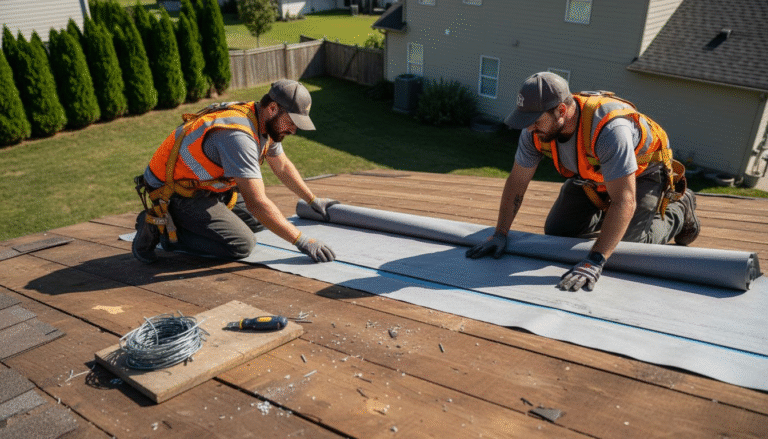
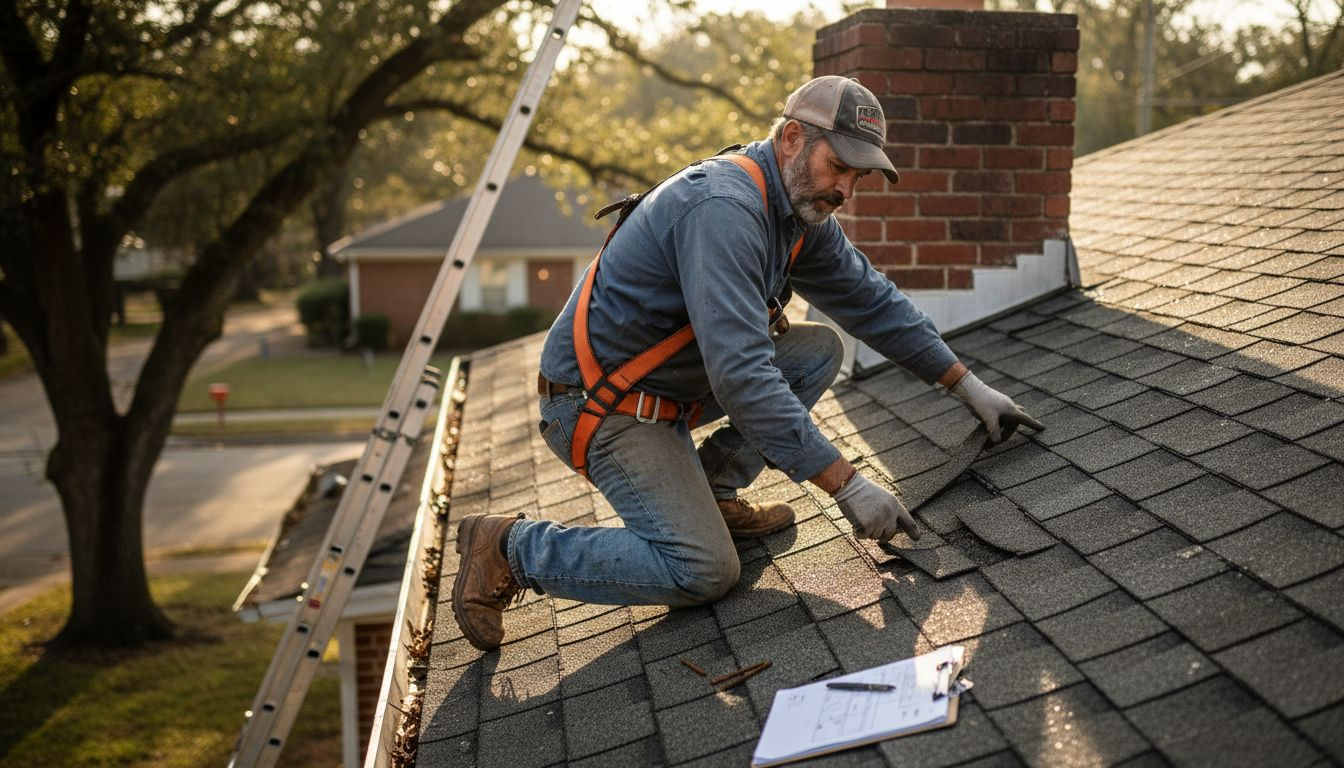
Proper roofing underlayment installation requires meticulous attention to detail and precision. Roofing underlayment best practices begin with thorough preparation, which includes carefully inspecting and cleaning the roof deck, removing any debris, and addressing structural damage before beginning the installation process.
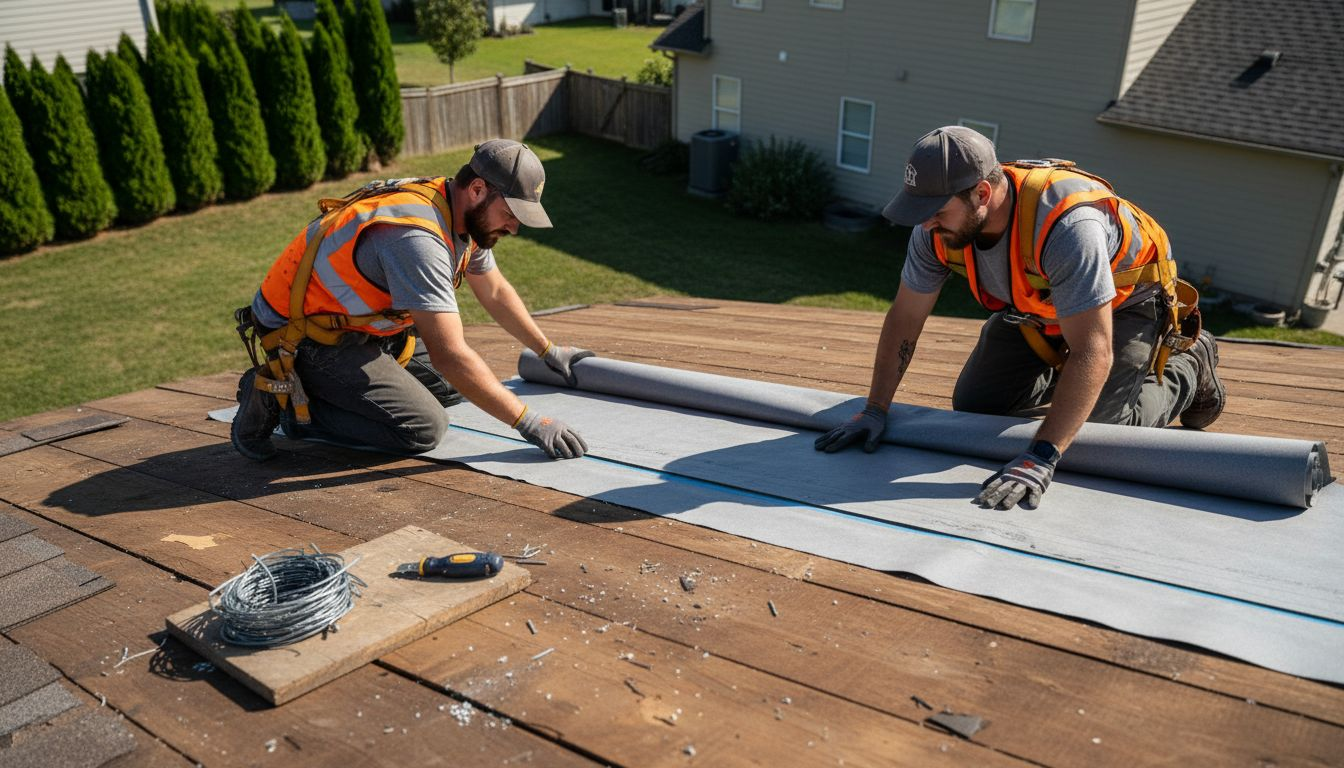
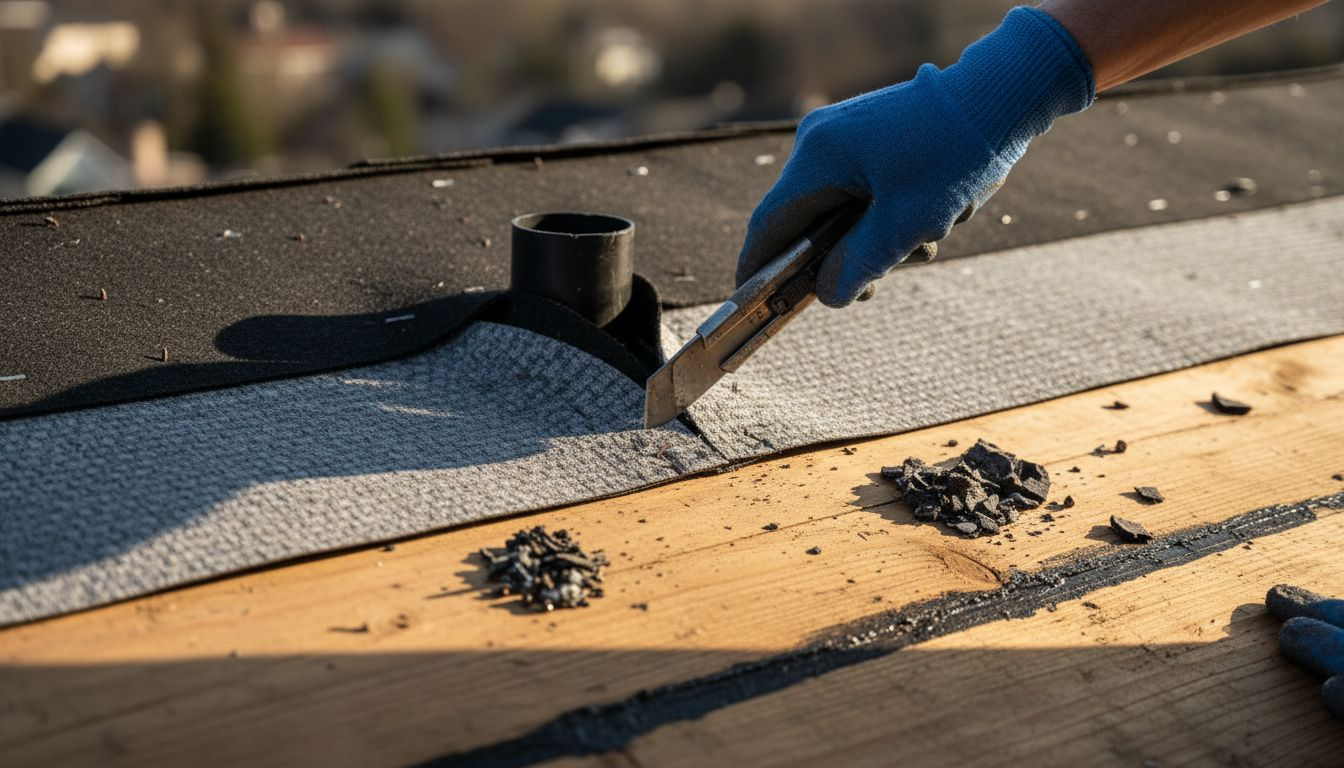
The installation sequence follows a critical bottom-up approach, starting at the roof’s eaves and progressively moving upward. Precise installation techniques demand horizontal layering with precise overlap between sections, ensuring that each subsequent layer slightly covers the previous one to create a continuous moisture barrier. Professionals use specialized cutting tools to achieve clean, precise edges and avoid creating potential points of water penetration.
Special attention must be paid to complex roof features like valleys, ridges, and penetration points such as chimneys and vents. These areas require extra care to maintain the underlayment’s integrity, often involving custom cutting and additional sealing techniques to prevent potential water infiltration. Ensuring proper ventilation compatibility and strictly adhering to manufacturer installation guidelines are crucial steps in creating a robust, long-lasting roofing system.
Pro tip: Always consult manufacturer specifications and local building codes before beginning underlayment installation to ensure compliance and optimal performance.
Comparing costs, risks, and common errors
Understanding the financial and structural implications of roofing underlayment requires careful analysis of material costs and potential risks. Underlayment installation mistakes can lead to significant long-term expenses, with improper installation potentially causing thousands of dollars in water damage and structural repairs.
Cost variations among underlayment materials are substantial. Traditional asphalt-saturated felt remains the most budget-friendly option, typically ranging from $0.20 to $0.50 per square foot. Synthetic underlayment offers improved durability at a higher price point of $0.70 to $1.50 per square foot, while rubberized asphalt represents the premium choice at $1.50 to $3.00 per square foot. Roof underlayment cost considerations demonstrate that investing in higher-quality materials can significantly reduce long-term maintenance and repair expenses.
Common installation errors pose serious risks to your roofing system. Critical mistakes include inadequate roof deck preparation, incorrect overlap between underlayment layers, improper fastener selection, and neglecting to seal critical penetration points. These errors can compromise the entire roofing system, leading to moisture infiltration, potential mold growth, and premature structural deterioration. Professional installation and meticulous attention to manufacturer guidelines remain the most effective strategies for mitigating these substantial risks.
This table summarizes common roof underlayment errors, potential consequences, and prevention tips:
| Installation Error | Possible Outcome | Prevention Strategy |
|---|---|---|
| Inadequate deck preparation | Water leaks, rot | Clean and repair roof deck first |
| Incorrect layer overlap | Moisture penetration | Follow recommended overlaps |
| Poor sealing at penetrations | Mold, interior damage | Use proper seals around vents |
| Wrong fasteners used | Early failure, blow-off | Select fasteners per material |
Pro tip: Request detailed documentation of installation techniques and material specifications from your roofing contractor to ensure comprehensive protection and validate potential warranty claims.
Secure Your Home’s Future with Expert Roofing Underlayment Solutions
Roofing underlayment is the silent guardian of your home’s roof. It protects against water leaks, wind damage, and weather extremes that can threaten your home’s structure and comfort. If you want to avoid costly repairs caused by poor installation or outdated materials, it is essential to prioritize high-quality underlayment combined with professional craftsmanship. At J. A. Kelly Contracting Services, we understand the importance of using durable, weather-resistant underlayment to keep your roof reliable year after year.
Take control of your roofing health today by choosing trusted experts in the Moncton area. Visit our Roofing Archives to learn about our innovative roofing techniques and how we deliver long-lasting protection. Whether you need an inspection or a full roof upgrade, our team offers free estimates and financing options. Act now to secure your home’s safety with proven underlayment installation and roofing solutions from J. A. Kelly Contracting Services. Don’t wait for leaks to appear—contact us and protect your investment with confidence.
Frequently Asked Questions
What is roofing underlayment and why is it important?
Roofing underlayment is a protective barrier installed beneath roofing materials, providing a secondary waterproofing layer that prevents moisture damage to the roof structure. It is essential for extending the lifespan of your roofing system by shielding it from water infiltration and environmental stress.
What are the main types of roofing underlayment materials?
The three primary types of roofing underlayment are asphalt-saturated felt, rubberized asphalt, and synthetic underlayment. Each material offers different levels of durability and waterproofing, with synthetic underlayment being the most advanced and durable option.
How does roofing underlayment work to protect my home?
Roofing underlayment acts as a defensive barrier against moisture by intercepting water before it penetrates the roof deck, especially during extreme weather conditions. It also contributes to energy efficiency, temperature regulation, and overall roofing system performance.
What are common mistakes to avoid during underlayment installation?
Common mistakes include inadequate deck preparation, incorrect overlap of underlayment layers, poor sealing at penetration points, and using the wrong fasteners. Avoiding these errors is crucial as they can lead to moisture infiltration and costly structural damage.
Recommended
- 7 Essential Roofing Materials List for Homeowners Explained – J. A. Kelly Contracting Services
- What Is a Roofing Warranty and Why It Matters – J. A. Kelly Contracting Services
- Timely Roof Repairs: Complete Guide for Homeowners – J. A. Kelly Contracting Services
- Roof Overlay Explained: Extending Your Roof’s Lifespan Affordably – J. A. Kelly Contracting Services
- Enhancing Hygiene and Durability with NU-CLAD Wall Cladding for Contractors