










Most homeowners in Moncton are surprised to learn that more than half of renovation projects exceed their original budgets, and american studies reveal that poor planning is often to blame. Organizing a major renovation goes far beyond picking colors or fixtures. When so much money and your family’s comfort are at stake, understanding all the moving parts helps you avoid expensive setbacks and disappointment.
Table of Contents
- What Renovation Planning Really Involves
- Types of Home Renovation Projects
- Key Steps in Successful Renovation Planning
- Budgeting and Financing Your Renovation
- Moncton Permit Laws and Compliance Issues
- Common Renovation Planning Mistakes to Avoid
Key Takeaways
| Point | Details |
|---|---|
| Holistic Planning is Essential | Renovation planning involves a comprehensive approach that balances technical, financial, and aesthetic considerations to enhance your home effectively. |
| Types of Renovation Projects Matter | Understand the different types of renovations, such as maintenance, functional upgrades, and aesthetic transformations, to align your objectives with your project’s scope. |
| Financial Planning is Crucial | Create a realistic budget that includes a contingency fund for unexpected challenges, and compare multiple contractor estimates to ensure a sound financial strategy. |
| Permit Compliance is Necessary | Familiarize yourself with local permit requirements to avoid penalties and ensure safe, compliant renovations that meet building codes. |
What Renovation Planning Really Involves
Renovation planning goes far beyond selecting paint colors and choosing new fixtures. It represents a comprehensive strategic process that demands careful consideration of multiple interconnected factors. At its core, renovation planning involves creating a holistic approach that balances technical requirements, financial constraints, and desired aesthetic outcomes.
The process begins with a thorough needs assessment, which requires homeowners to critically evaluate their current living space and identify specific improvement goals. This initial stage involves analyzing building performance and sustainability indicators to determine precise renovation objectives. Homeowners must consider factors like energy efficiency, structural integrity, functional improvements, and potential long-term value enhancement. Effective planning means understanding not just what you want to change, but why and how those changes will impact your home’s overall performance and livability.
Successful renovation planning also requires meticulous resource allocation and scheduling. This means developing a realistic timeline, establishing a comprehensive budget, and strategically sequencing renovation activities to minimize disruption. Professionals recommend creating a phased execution plan that breaks down the project into manageable components, allowing for flexibility and potential adjustments as the renovation progresses. Proper planning helps control costs, manage expectations, and reduce the likelihood of unexpected complications.
Pro tip: Create a detailed renovation roadmap with contingency funds representing 10-15% of your total budget to account for unexpected challenges and potential design modifications.
Types of Home Renovation Projects
Home renovation projects encompass a diverse range of improvements designed to enhance both the functionality and aesthetic appeal of residential spaces. Renovation types vary dramatically, from minor cosmetic updates to comprehensive structural transformations that can dramatically alter a home’s layout and living experience.
Homeowners typically engage in several primary categories of renovation projects, including repairs, improvements, and system modernization. These projects can be broadly categorized into three main groups: maintenance and repair renovations, functional upgrades, and aesthetic transformations. Maintenance renovations focus on preserving the home’s structural integrity, addressing issues like roof repairs, foundation maintenance, and essential system replacements. Functional upgrades involve improving the practical utility of living spaces, such as kitchen remodels, bathroom renovations, or creating more open floor plans that enhance daily living experiences.

Aesthetic transformations represent another significant category of home renovation projects. These renovations are primarily driven by personal style preferences and include activities like repainting, updating flooring, installing new fixtures, and landscaping improvements. Unlike purely functional renovations, aesthetic projects aim to refresh the visual appeal and create a more personalized living environment. Some renovation projects also blend functional and aesthetic goals, such as kitchen remodels that improve both cooking efficiency and visual design.
Here’s how the main types of home renovation projects differ:
| Renovation Type | Main Focus | Typical Activities | Effect on Home Value |
|---|---|---|---|
| Maintenance & Repair | Structural integrity | Roof repair, foundation fixes | Protects resale potential |
| Functional Upgrades | Daily use improvements | Kitchen or bath remodels | Often increases value |
| Aesthetic Transformation | Visual appeal | Painting, new flooring | Varies by design quality |
Pro tip: Before starting any renovation project, carefully document your existing space with photographs and measurements to help contractors provide more accurate estimates and minimize potential misunderstandings.
Key Steps in Successful Renovation Planning
Successful home renovation planning is a complex process that requires meticulous preparation, strategic thinking, and comprehensive understanding of your project’s scope and potential challenges. Renovation planning demands more than just aesthetic considerations – it involves a systematic approach that balances technical requirements, financial constraints, and practical implementation strategies.
The initial stage of renovation planning centers on establishing protective measures and comprehensive stakeholder communication. This critical phase involves conducting a thorough assessment of your existing space, defining clear project objectives, and creating a detailed roadmap that outlines specific goals, budget allocations, and potential challenges. Homeowners should develop a comprehensive inventory of required improvements, prioritizing structural integrity, functional upgrades, and aesthetic enhancements. This preliminary assessment helps identify potential obstacles, estimate realistic timelines, and develop contingency plans for unexpected complications.
Financial planning represents another crucial component of successful renovation strategy. This involves creating a realistic budget that accounts for material costs, labor expenses, potential unexpected repairs, and a financial buffer for unforeseen challenges. Homeowners should obtain multiple contractor estimates, compare pricing structures, and understand the full scope of potential expenses. Additionally, investigating financing options, such as home improvement loans or lines of credit, can provide flexible funding solutions that support your renovation goals without causing undue financial strain.
Pro tip: Create a dedicated renovation project folder that includes all estimates, contracts, design plans, and communication records to maintain organized and transparent documentation throughout your renovation process.
Budgeting and Financing Your Renovation
Budgeting and financing a home renovation represents one of the most critical and challenging aspects of any home improvement project. Financial planning requires a strategic approach that balances realistic expectations with comprehensive financial analysis, ensuring your renovation dreams align with your fiscal capabilities.
Homeowners have multiple options for securing funding and managing renovation expenses, each with unique advantages and considerations. Traditional financing methods include personal savings, home equity lines of credit, personal loans, and specialized home improvement loans. Each funding source comes with distinct requirements, interest rates, and potential tax implications. Some homeowners might qualify for specific programs like FHA Title I Property Improvement Loans, which provide dedicated funding for home renovation projects and can offer more flexible terms compared to conventional lending options.
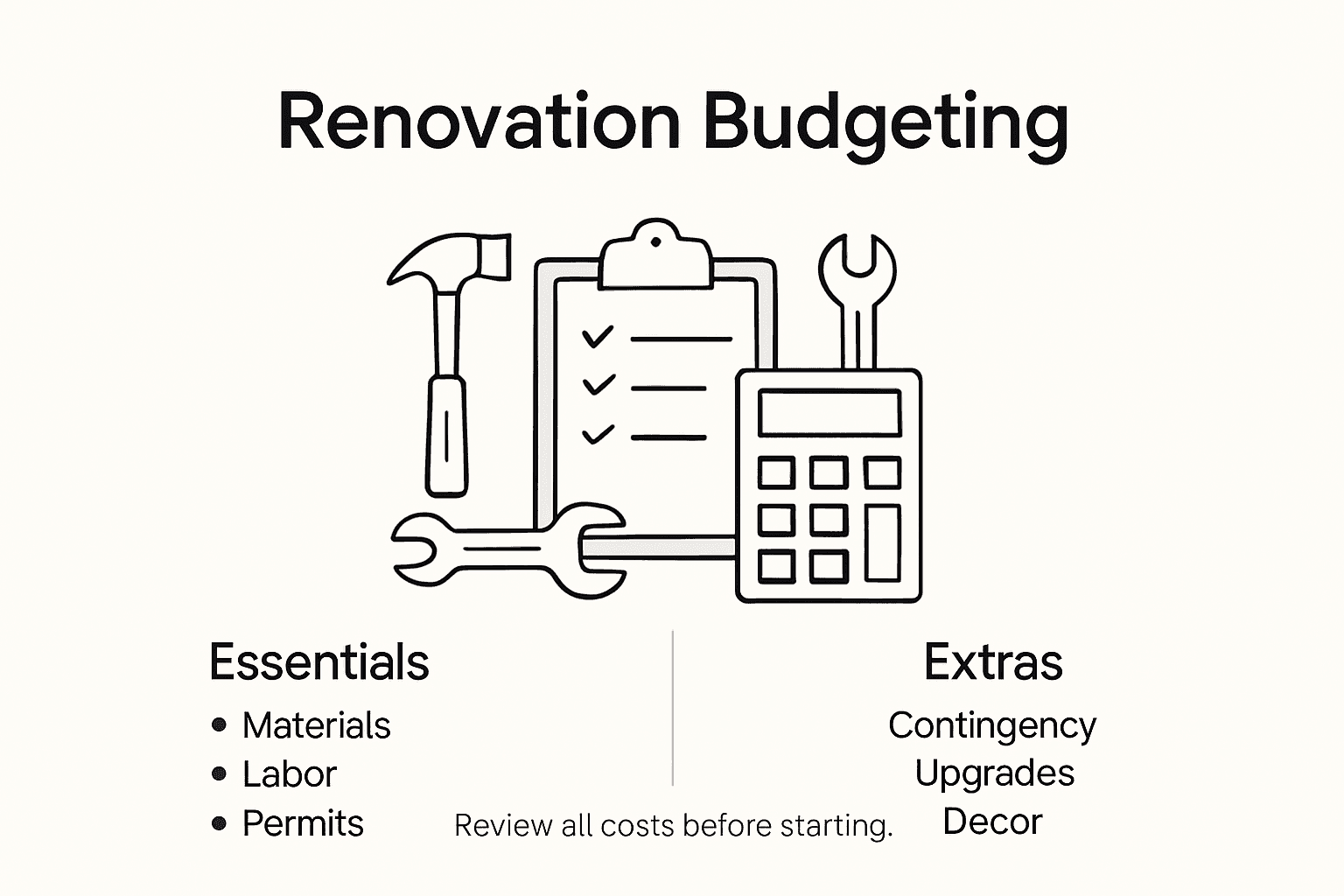
Creating a comprehensive budget involves much more than simply estimating material and labor costs. Successful financial planning requires a detailed breakdown of anticipated expenses, including potential unexpected repairs, permit fees, design consultations, and a recommended contingency fund representing 10-20% of your total project budget. Homeowners should obtain multiple contractor estimates, compare pricing structures, and thoroughly understand the full scope of potential expenses. This approach helps prevent financial overextension and ensures a more predictable renovation experience.
The table below outlines key differences between major renovation financing options:
| Funding Source | Typical Eligibility | Interest Rates | Special Considerations |
|---|---|---|---|
| Personal Savings | Accessible to all | None | No debt, but reduces cash reserves |
| Home Equity Line | Sufficient home equity required | Variable, often lower | Secured by property |
| Personal Loan | Good credit usually needed | Higher than secured | No collateral needed |
| Improvement Loan | Lender and project qualification | Moderate to low | May offer flexible terms |
Pro tip: Schedule consultations with at least three contractors to obtain comprehensive estimates, and always request a detailed, line-item breakdown of projected expenses to avoid hidden costs and unexpected financial surprises.
Moncton Permit Laws and Compliance Issues
Navigating the complex landscape of building permits in Moncton requires a thorough understanding of local and provincial regulations. Permit compliance is not just a bureaucratic formality but a critical step in ensuring the safety, legality, and structural integrity of any home renovation project.
The regulatory framework for building permits in Moncton is fundamentally guided by the New Brunswick Building Code Act, which establishes comprehensive guidelines for construction and renovation projects. This legislation mandates that homeowners obtain proper permits for a wide range of renovation activities, from minor structural changes to major home improvements. The permit process involves submitting detailed project plans, undergoing inspections, and ensuring that all modifications comply with the National Building Code of Canada and provincial safety standards. Failure to secure appropriate permits can result in significant penalties, including potential fines, mandatory removal of unauthorized work, and complications when selling the property.
Moncton’s permit requirements vary depending on the scope and nature of the renovation. Typically, projects requiring permits include structural alterations, electrical system changes, plumbing modifications, additions to the home, and significant interior or exterior renovations. Homeowners must submit comprehensive documentation, including detailed architectural drawings, site plans, and specific technical specifications that demonstrate compliance with local building codes. The local building department reviews these submissions carefully, assessing factors such as structural safety, energy efficiency, accessibility, and environmental considerations.
Pro tip: Before starting any renovation, schedule a pre-application consultation with the Moncton building permit office to understand exact requirements and potentially streamline your permit approval process.
Common Renovation Planning Mistakes to Avoid
Home renovation projects can quickly become complex and challenging, with potential pitfalls that can derail even the most carefully planned improvements. Renovation planning requires strategic foresight and meticulous attention to detail to prevent costly and frustrating mistakes that can compromise project success.
One of the most critical errors homeowners make is failing to establish clear project governance and communication protocols. Inadequate oversight can lead to significant budget overruns, unexpected delays, and substandard workmanship. This includes not defining explicit roles and responsibilities, neglecting to establish regular communication channels with contractors, and failing to implement systematic progress tracking. Successful renovation planning demands a structured approach where expectations are clearly defined, milestones are regularly reviewed, and potential issues are identified and addressed proactively.
Another common mistake involves underestimating the complexity of renovation logistics and the potential disruption to daily life. Homeowners often fail to consider the full impact of renovation activities on their living environment, family routine, and personal schedule. This includes not creating comprehensive contingency plans, overlooking potential temporary housing needs, and not fully understanding the timeline and sequencing of different project phases. Effective planning requires a holistic view that goes beyond mere aesthetic or structural changes, taking into account the human element of renovation and developing strategies to minimize inconvenience and stress.
Pro tip: Create a dedicated renovation project management notebook or digital folder where you document every communication, decision, and change order to maintain a clear and transparent record throughout your renovation process.
Take Control of Your Renovation Planning with Trusted Local Experts
Avoid the costly home mistakes many homeowners face by partnering with a proven team that understands every detail of successful renovation planning. The article highlights how critical it is to manage budgets, contractor communication, and permit compliance to protect your investment and peace of mind. Whether you are considering functional upgrades, aesthetic transformations, or essential repairs, J. A. Kelly Contracting Services in Moncton is ready to guide you through these complex steps.
Discover expert craftsmanship and reliable project management by exploring our Home Renovation Archives – J. A. Kelly Contracting Services. Our team’s experience ensures your renovation stays on track, within budget, and compliant with local permit laws. Don’t risk delays and confusion. Contact us today at https://jakellycontractingservices.ca to schedule a consultation and receive your free estimate. Take the first step toward a beautifully renovated home with confidence and trusted support.
Frequently Asked Questions
What is the first step in renovation planning?
The first step in renovation planning is conducting a thorough needs assessment to evaluate your current living space and define specific improvement goals.
How can I effectively budget for my renovation project?
To effectively budget for your renovation, create a detailed breakdown of anticipated expenses, including potential unexpected repairs and permit fees, and consider setting aside a contingency fund of 10-20% of your total budget.
Why is it important to obtain building permits for my renovation?
Obtaining building permits is crucial to ensure that your renovations comply with local building codes and safety regulations, preventing legal issues, possible fines, and complications when selling the property in the future.
What common mistakes should I avoid when planning my renovation?
Common mistakes to avoid include failing to establish clear communication with contractors, underestimating the impact of logistics on daily life, and not creating comprehensive contingency plans for unexpected challenges.
Recommended
- How to Plan Home Renovation: Step-by-Step Guide for Homeowners – J. A. Kelly Contracting Services
- Preparing Home for Renovation: Essential Steps for Success – J. A. Kelly Contracting Services
- 7 Key Advantages of Home Renovation for Homeowners – J. A. Kelly Contracting Services
- What Is Kitchen Remodeling? Complete Homeowner Guide – J. A. Kelly Contracting Services
- Time lapse costruzione casa: 5 motivi per sceglierlo | Overfly.me