








Many Moncton homeowners are surprised to learn that over fifty percent of residential renovation projects go over budget when estimates are unclear. Whether you want a new roof, fresh flooring, or a backyard deck, understanding the difference between a free estimate and a paid consultation is crucial. Moncton families deserve cost transparency just as much as any American homeowner. This guide makes it easier to spot hidden fees, plan your renovation, and choose a contractor you can trust.
Table of Contents
- Free Estimates Defined For Homeowners
- How Free Estimates Work In Contracting
- Comparing Free Vs. Paid Estimates
- Cost Transparency And Financial Planning
- Protecting Yourself From Hidden Charges
Key Takeaways
| Point | Details |
|---|---|
| Understanding Free Estimates | Free estimates provide a non-binding overview of potential project costs, helping homeowners budget effectively. |
| Comparing Estimation Types | Free estimates offer a general overview, while paid estimates deliver detailed insights and accuracy for complex projects. |
| Cost Transparency Importance | Maintaining transparency in cost estimates aids homeowners in avoiding financial surprises and encourages informed decision-making. |
| Guarding Against Hidden Charges | Homeowners should anticipate unexpected costs by requesting detailed estimates and maintaining clear communication with contractors. |
Free Estimates Defined for Homeowners
A free estimate is a preliminary, non-binding cost assessment that contractors provide to help homeowners understand potential project expenses before committing to work. These assessments typically cover critical aspects like labor, materials, and expected overhead for a specific home renovation or construction task. When you request a free estimate, you’re essentially getting a professional preview of what your home improvement project might entail financially.
Understanding free estimates requires recognizing their purpose and limitations. Professional estimates provide potential clients with an approximation of project costs before work begins. They are not fixed contracts but rather informed projections that help homeowners budget and plan. Most reputable contractors offer these assessments to demonstrate transparency and build trust with potential clients, giving you insight into the scope and potential expenses of your renovation project.
In the context of home renovations, free estimates serve several crucial functions. They help you compare pricing between different contractors, understand the complexity of your project, and make informed decisions about your home improvement plans. Estimates typically include a breakdown of expected costs, which might cover materials, labor, potential challenges, and a rough timeline for completion. However, it’s important to remember that these are preliminary assessments and actual costs can vary depending on unforeseen circumstances or additional work discovered during the project.
Pro tip: Always request detailed written estimates from multiple contractors and ask clarifying questions about potential additional costs or project variables before making a final decision.
How Free Estimates Work in Contracting
In the world of home renovation and construction, free estimates play a critical role in helping homeowners understand potential project costs and scope. Cost estimates in contracting are approximations of the financial resources required for a specific project, serving as essential tools for budgeting and planning. Contractors use these preliminary assessments to provide transparency and help clients make informed decisions about their renovation needs.
Typically, a free estimate involves a comprehensive evaluation process. A professional contractor will visit your property, assess the specific requirements of your project, and provide a rough breakdown of expected expenses. This assessment usually covers key components such as materials, labor costs, potential challenges, and a projected timeline. While these estimates are not fixed contracts, they offer valuable insights into the potential investment required for your home improvement project.

The accuracy of free estimates can vary depending on several factors. More detailed and professional estimates tend to provide a more reliable projection of costs. The estimate might include considerations for potential complications, material pricing, labor rates, and any unique challenges specific to your renovation project. Some contractors might provide a range of potential costs to account for variables that could impact the final price, giving homeowners a more realistic expectation of the potential investment.
Pro tip: Request written estimates from multiple contractors and ask detailed questions about potential additional costs or project variables to ensure you have a comprehensive understanding of the potential expenses.
Comparing Free vs. Paid Estimates
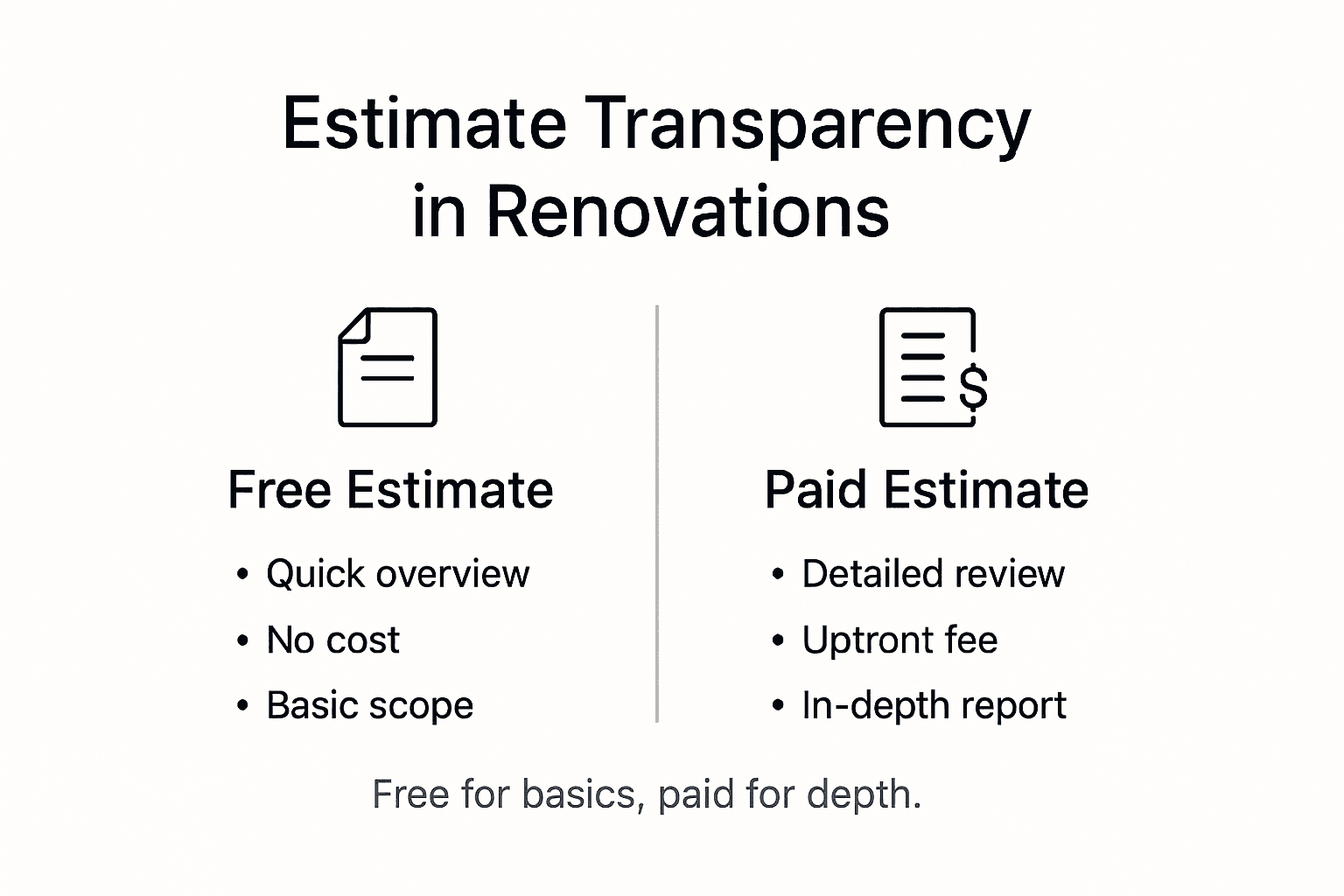
Homeowners often encounter two primary types of cost assessments when planning home renovations: free estimates and paid estimates. While both serve the purpose of helping you understand potential project expenses, they differ significantly in depth, detail, and comprehensiveness. Free estimates typically provide a general overview of potential costs, offering a quick snapshot of what a project might entail without extensive investigation.
Paid estimates, in contrast, represent a more comprehensive and detailed assessment of your renovation project. These typically involve a more in-depth site inspection, comprehensive analysis of potential project complexities, and a more thorough breakdown of anticipated expenses. Contractors offering paid estimates often invest more time and resources, conducting more rigorous measurements, material assessments, and potential challenge evaluations. This means you’ll receive a more precise and reliable projection of your project’s total cost.
The key differences between free and paid estimates extend beyond just pricing. Free estimates are generally quicker, often completed after a brief property walkthrough, and provide a broad range of potential costs. Paid estimates involve a more meticulous process, potentially including detailed drawings, precise material specifications, and a more nuanced understanding of potential renovation challenges. For complex projects like full home renovations, structural modifications, or specialized construction work, a paid estimate can provide significantly more value and accuracy.
Below is a concise comparison of free and paid estimates for home renovation projects:
| Aspect | Free Estimate | Paid Estimate |
|---|---|---|
| Detail Level | General overview of costs | Thorough, line-by-line analysis |
| Time Requirement | Brief walkthrough | Detailed site inspection |
| Applicability | Simple, routine projects | Complex, custom renovations |
| Commitment Required | No payment or obligation | Upfront fee, signals commitment |
Pro tip: For straightforward projects with clear scopes, free estimates work well, but for complex or high-value renovations, investing in a paid estimate can save you substantial money by identifying potential issues early.
Cost Transparency and Financial Planning
Financial planning for home renovations requires a strategic approach to understanding and managing project costs. Cost transparency is the cornerstone of successful home improvement budgeting, enabling homeowners to make informed decisions and prevent unexpected financial surprises. Effective financial management relies heavily on cost transparency from project inception through completion, helping stakeholders set realistic budgets and anticipate potential risks.
Detailed cost estimates serve as critical tools in financial planning, providing homeowners with a comprehensive view of potential expenses. These estimates should break down anticipated costs into clear categories, including materials, labor, potential challenges, and contingency funds. Understanding the nuanced components of your renovation budget allows for more accurate financial preparation. Contractors who provide transparent, itemized estimates help build trust and enable homeowners to make more confident decisions about their home improvement projects.
Successful financial planning goes beyond initial cost estimates. It involves ongoing monitoring, regular budget updates, and the flexibility to adjust as project details emerge. Managing project finances requires anticipating expenses, allocating contingency funds, and regularly updating budgets to reflect changes. Homeowners should maintain open communication with their contractors, request periodic financial updates, and be prepared to make informed adjustments throughout the renovation process. This proactive approach helps prevent budget overruns and ensures that the project remains financially manageable.
Pro tip: Create a detailed spreadsheet tracking all estimated and actual expenses, including a 10-15% buffer for unexpected costs, to maintain financial control throughout your renovation project.
Protecting Yourself from Hidden Charges
Home renovation projects can quickly become financial minefields if homeowners are not vigilant about potential hidden charges. Unexpected costs can derail even the most carefully planned budgets, making it critical to understand and anticipate potential financial pitfalls. Homeowners can protect themselves by creating detailed plans, setting realistic budgets with contingencies, and requesting multiple contractor estimates, which helps minimize the risk of surprise expenses.
Most hidden charges emerge from several key areas that homeowners might not initially consider. Structural issues discovered during demolition, unexpected permit requirements, material price fluctuations, and complex design modifications can significantly impact your project’s total cost. Professional contractors should provide transparent communication about potential variables that might affect pricing. This means asking detailed questions about potential complications, requesting comprehensive written estimates that outline potential additional expenses, and understanding exactly what is and is not included in the initial project quote.
Here’s a helpful summary of common sources of hidden home renovation charges to monitor:
| Hidden Charge Source | Description | Prevention Tip |
|---|---|---|
| Structural Surprises | Issues found during demolition | Inspect thoroughly pre-project |
| Permit & Code Changes | New fees due to regulation updates | Confirm requirements in advance |
| Material Price Increases | Supply cost spikes during project | Lock in prices or review contracts |
| Scope Modifications | Added features or design adjustments | Request written change approvals |
Effective protection against hidden charges requires a proactive approach to project management. Homeowners should insist on detailed, itemized estimates that break down potential additional costs, maintain open lines of communication with their contractors, and build a financial buffer into their renovation budget. This buffer should typically range between 10-20% of the total project cost to accommodate unexpected discoveries or necessary modifications. Regular check-ins with your contractor, requesting updated cost projections, and being prepared to make informed decisions can help prevent financial surprises and keep your renovation project on track.
Pro tip: Always request a written change order that details any additional work and associated costs before allowing contractors to proceed with unexpected modifications to your renovation project.
Take Control of Your Home Renovation Costs with a Free Estimate
Avoiding surprise expenses and hidden charges is one of the biggest concerns homeowners face during renovations. As highlighted in the article “Why Get a Free Estimate Avoiding Surprises in Renovations,” understanding clear project costs upfront through detailed, transparent estimates is essential. When contractors provide a free estimate, you gain valuable insight into expected labor, materials, and timelines so you can plan your budget confidently and prevent unexpected financial setbacks.
At JA Kelly Contracting Services, we specialize in delivering honest, detailed free estimates tailored to your specific renovation needs in Moncton, New Brunswick. Whether your project involves roofing, decks, flooring, or extensive home renovations, our experienced professionals help you compare options and make informed decisions that protect your investment. We emphasize open communication and transparency to keep your project on budget and on schedule.
Don’t wait for surprises to derail your home improvement plans. Get started today by requesting your detailed free estimate from JA Kelly Contracting Services. Explore how our trusted services and commitment to quality craftsmanship can give you peace of mind throughout your renovation journey.
Frequently Asked Questions
What is a free estimate in home renovations?
A free estimate is a preliminary cost assessment provided by contractors to help homeowners understand potential project expenses before starting work on renovations.
Why should I request multiple free estimates?
Requesting multiple free estimates allows you to compare prices, understand varying project scopes, and make informed decisions about which contractor to hire for your renovation.
What information is typically included in a free estimate?
A free estimate usually includes a breakdown of expected costs such as labor, materials, potential challenges, and a rough timeline for project completion.
How do free estimates help avoid hidden charges during renovations?
Free estimates provide homeowners with transparency regarding potential costs, helping to identify areas where hidden charges might arise and allowing for better budget planning and risk management.
Recommended
- What Is a Free Roofing Estimate: Key Insights for Homeowners – J. A. Kelly Contracting Services
- How to Plan Home Renovation: Step-by-Step Guide for Homeowners – J. A. Kelly Contracting Services
- What Is a Roofing Estimate? Complete Breakdown – J. A. Kelly Contracting Services
- Preparing Home for Renovation: Essential Steps for Success – J. A. Kelly Contracting Services