





Over 60 percent of American homes feature a deck or outdoor platform, turning backyards into valuable spaces for relaxation and entertainment. As outdoor living becomes a top priority, understanding deck construction matters more than ever for homeowners who want to enhance property function and appeal. Whether you dream of weekend barbecues or peaceful evenings outside, this guide helps you navigate deck types, safety codes, and smart investment choices with clarity and confidence.
Table of Contents
- Defining Deck Construction And Its Purpose
- Popular Deck Types And Materials Compared
- Key Steps In The Deck Construction Process
- Permits, Safety Codes, And Legal Requirements
- Costs, Maintenance Needs, And Common Pitfalls
Key Takeaways
| Point | Details |
|---|---|
| Deck Purpose | Deck construction enhances outdoor living areas, providing a blend of aesthetic appeal and functional space for homeowners. |
| Material Selection | Choosing the right materials is crucial for durability and maintenance; options range from wood to composite and aluminum. |
| Regulatory Compliance | Securing necessary permits and understanding safety codes is essential for legal compliance and structural integrity. |
| Maintenance Planning | Create an annual maintenance budget to address cleaning and repairs, ensuring the longevity of your deck investment. |
Defining Deck Construction and Its Purpose
Deck construction represents a specialized form of outdoor structural design that transforms residential spaces by creating elevated platforms connected to homes. These architectural extensions serve multiple functional and aesthetic purposes, providing homeowners with versatile outdoor living areas that seamlessly blend interior comfort with exterior environments.
At its core, deck construction involves carefully planned structural engineering to create a stable, weight-bearing surface designed to withstand environmental challenges. Professional deck builders must consider critical factors like material selection, load-bearing capacity, local weather conditions, and precise architectural integration. The purpose extends beyond simple ground-level platforms – decks are sophisticated architectural elements that enhance structural support and property stability while dramatically improving outdoor usability.
Typical deck construction involves strategic planning around key structural components. These include foundational posts, robust framing, decking materials (like pressure-treated wood, composite materials, or hardwoods), secure fastening systems, and protective finishing treatments. Homeowners increasingly view decks as valuable property investments that not only expand living spaces but also significantly boost residential aesthetic appeal and market value.
Pro Tip: Research local building codes and obtain proper permits before starting deck construction to ensure structural compliance and avoid potential legal complications.
By working with experienced deck contractors, homeowners can transform their outdoor spaces into beautiful, functional extensions of their living environments that provide years of enjoyment and value.
Popular Deck Types and Materials Compared
Homeowners have multiple deck material options, each offering unique characteristics and performance advantages. Common deck types include wood, composite, and aluminum materials, with selections driven by budget, aesthetic preferences, durability requirements, and maintenance considerations.
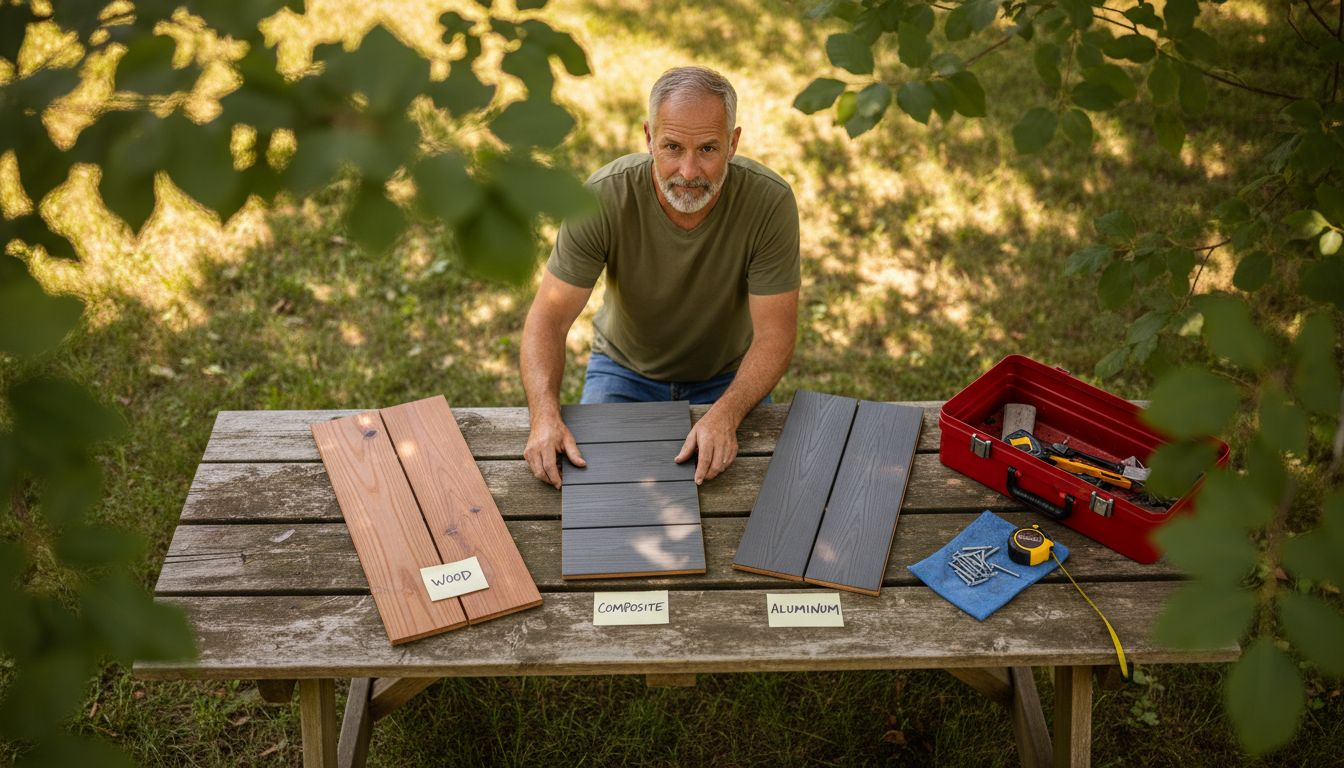
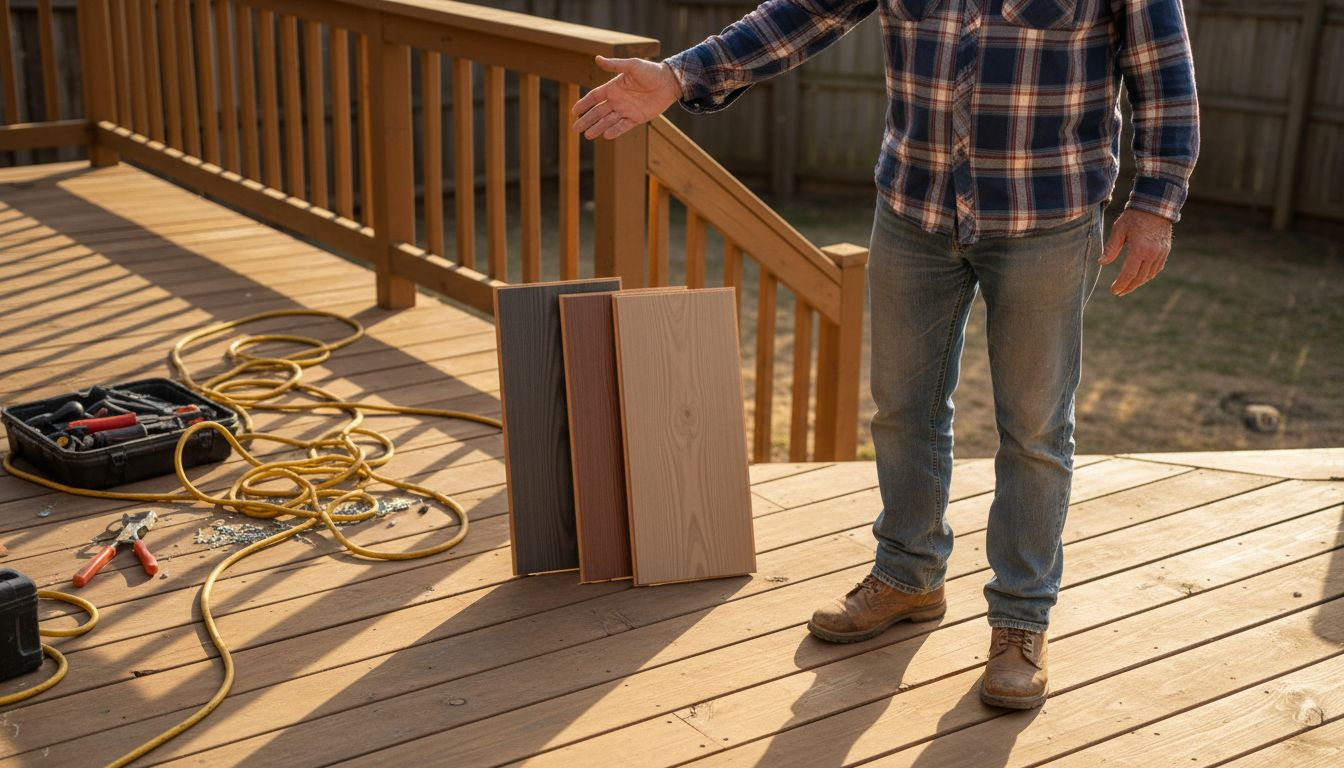
Wood decking remains a classic choice, with pressure-treated lumber, cedar, and hardwood offering natural aesthetics and traditional charm. Composite decking has gained significant popularity, providing enhanced durability and reduced maintenance needs. These synthetic materials combine wood fibers with plastic polymers, creating a resilient surface that resists weathering, insect damage, and color fading. Advanced polymer technologies like Glass Fiber Reinforced Polymer (GFRP) decking represent cutting-edge innovations that dramatically improve structural performance and longevity.
Each deck material presents distinct advantages. Wood offers affordability and natural beauty but requires regular maintenance. Composite materials provide longer lifespans with minimal upkeep. Aluminum decking emerges as a lightweight, corrosion-resistant option ideal for specific architectural designs. Custom deck solutions can help homeowners select the most appropriate material based on their unique environmental conditions and aesthetic preferences.
Pro Tip: Request material samples and durability test data before making a final deck material selection to ensure long-term satisfaction and performance.
Understanding these material nuances allows homeowners to make informed decisions that balance initial investment, maintenance requirements, and long-term value for their outdoor living spaces.
Here’s how key deck materials compare in critical performance categories:
| Deck Material | Estimated Lifespan | Maintenance Effort | Typical Initial Cost |
|---|---|---|---|
| Pressure-Treated Wood | 10–15 years | Annual sealing, staining | Lowest |
| Composite | 25–30 years | Occasional cleaning only | Moderate |
| Hardwood | 20–30 years | Regular oiling, upkeep | Higher |
| Aluminum | 30+ years | Minimal, periodic cleaning | Highest |
Key Steps in the Deck Construction Process
Deck construction is a meticulous process that demands careful planning, precise execution, and strategic material selection. Design optimization begins with understanding deck geometry and structural requirements, involving comprehensive assessments of load-bearing capabilities and environmental considerations.
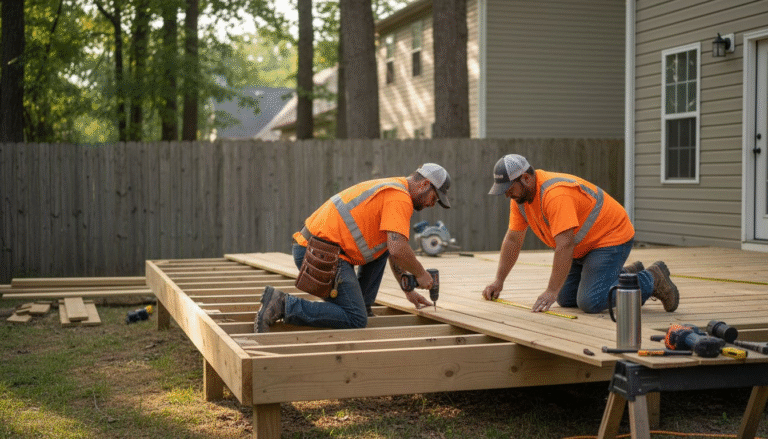
The initial phase involves site preparation and foundation work. Contractors typically start by marking the deck location, ensuring proper alignment with the existing structure. This requires excavating and creating stable concrete footings that will support foundational posts. Advanced strengthening techniques, including Carbon Fiber Reinforced Polymer (CFRP) applications, can be incorporated to enhance the deck’s structural integrity and load-carrying capacity.
Framing represents the critical structural backbone of deck construction. Builders carefully install primary support beams, joists, and connecting hardware, ensuring precise measurements and proper spacing. Each component must be level, square, and securely fastened to create a stable platform. Professional deck contractors utilize specialized techniques to guarantee maximum durability and safety.
Pro Tip: Always obtain necessary building permits and schedule professional inspections at key construction stages to ensure compliance with local building codes and structural safety standards.
The final stages involve decking material installation, railing construction, and finishing treatments that protect the structure and enhance its aesthetic appeal.
Permits, Safety Codes, and Legal Requirements
Deck construction involves navigating a complex landscape of regulatory requirements designed to ensure public safety and structural integrity. Non-destructive evaluation methods are crucial for assessing structural compliance, helping contractors and homeowners verify that deck construction meets rigorous safety standards.
Local building departments typically require comprehensive permit applications that detail deck specifications, including precise measurements, materials, load-bearing capacities, and proximity to property lines. These permits serve as critical safeguards, mandating professional inspections at multiple stages of construction. Precast construction techniques demand strict adherence to specific design recommendations, ensuring structural reliability and minimizing potential safety risks.
Safety codes address multiple aspects of deck construction, including foundation depth, attachment methods, railing height, and load distribution. These regulations vary by municipality but generally aim to prevent structural failures and protect homeowners and users. Professional deck contractors understand these nuanced requirements and can navigate complex permitting processes effectively.
Pro Tip: Request a comprehensive written permit review from your local building department before starting construction, detailing all specific requirements for your deck project.
Ultimately, compliance with permits and safety codes represents an investment in long-term structural integrity and personal safety.
Below is a summary of critical permit and safety code considerations for deck projects:
| Requirement | Purpose | Typical Documentation |
|---|---|---|
| Building Permit | Legal authorization and compliance | Site plan, deck drawings |
| Load-Bearing Calculations | Ensure structural safety | Engineering reports |
| Property Line Verification | Avoid encroachment on neighbors | Land survey, setback map |
| Final Inspection | Confirm completed code compliance | Inspection report |
Costs, Maintenance Needs, and Common Pitfalls
Deck construction represents a significant financial investment that requires careful consideration of long-term maintenance and potential challenges. Material durability directly impacts ongoing maintenance expenses and overall project costs, with homeowners needing to strategically select materials that balance initial expenses with future upkeep requirements.

Common pitfalls in deck construction often emerge from inadequate planning and material selection. Homeowners frequently underestimate environmental factors that can accelerate structural degradation, such as moisture exposure, temperature fluctuations, and UV radiation. Non-destructive evaluation methods can help identify potential structural issues before they become costly problems, allowing proactive maintenance and preservation of the deck’s integrity.
Maintenance costs vary significantly depending on material choices. Wood decks typically require annual treatments like staining or sealing, while composite materials offer lower maintenance but higher initial investment. Factors such as local climate, sun exposure, and foot traffic dramatically influence a deck’s long-term performance. Professional deck contractors can provide tailored recommendations that align with specific environmental conditions and homeowner expectations.
Pro Tip: Create an annual maintenance budget and schedule that includes cleaning, inspection, and potential repairs to extend your deck’s lifespan and protect your initial investment.
Ultimately, understanding potential maintenance needs and associated costs helps homeowners make informed decisions that balance aesthetic desires with practical financial considerations.
Transform Your Outdoor Space with Expert Deck Construction
Are you ready to overcome challenges like selecting durable materials, navigating permits, and ensuring long-lasting safety for your deck? Our team at J. A. Kelly Contracting Services understands these concerns deeply, from structural integrity to maintenance needs. We specialize in creating beautiful, code-compliant decks that add both value and enjoyment to your home.

Discover how our professional craftsmanship and personalized approach can make your deck dreams a reality today. Visit Home Renovation Archives to explore our expertise and projects. Don’t wait to enhance your outdoor living—contact us now at https://jakellycontractingservices.ca and take the first step toward a safe and stunning deck built to last.
Frequently Asked Questions
What is deck construction?
Deck construction is the process of creating elevated platforms connected to homes, designed to provide outdoor living spaces that enhance usability and aesthetic appeal. It involves careful planning and structural engineering to ensure stability and safety.
What materials are commonly used in deck construction?
Common materials for deck construction include pressure-treated wood, composite materials, hardwood, and aluminum. Each material offers distinct benefits in terms of durability, maintenance, and aesthetic appeal.
How do I maintain my deck after construction?
Maintenance for decks varies by material: wood decks typically require annual sealing or staining, while composite materials need occasional cleaning. Regular inspections and proactive care can extend the lifespan of your deck.
What permits are required for deck construction?
Deck construction usually requires obtaining a building permit that details deck specifications. Local building codes also dictate safety requirements, including foundation depth and railing heights, which must be adhered to for compliance.
Recommended
- Role of a Deck Contractor: Everything You Need to Know – J. A. Kelly Contracting Services
- Complete Guide to Roof Decking for Homeowners – J. A. Kelly Contracting Services
- Transform Your Home with Custom Decks and Outdoor Spaces – J. A. Kelly Contracting Services
- Build Your Dream Deck in Moncton for Just $150 / Month Build Your Dream Deck in Moncton for Just $150 a Month – J. A. Kelly Contracting Services
- Complete Guide to Benefits of Custom Wooden Doors